
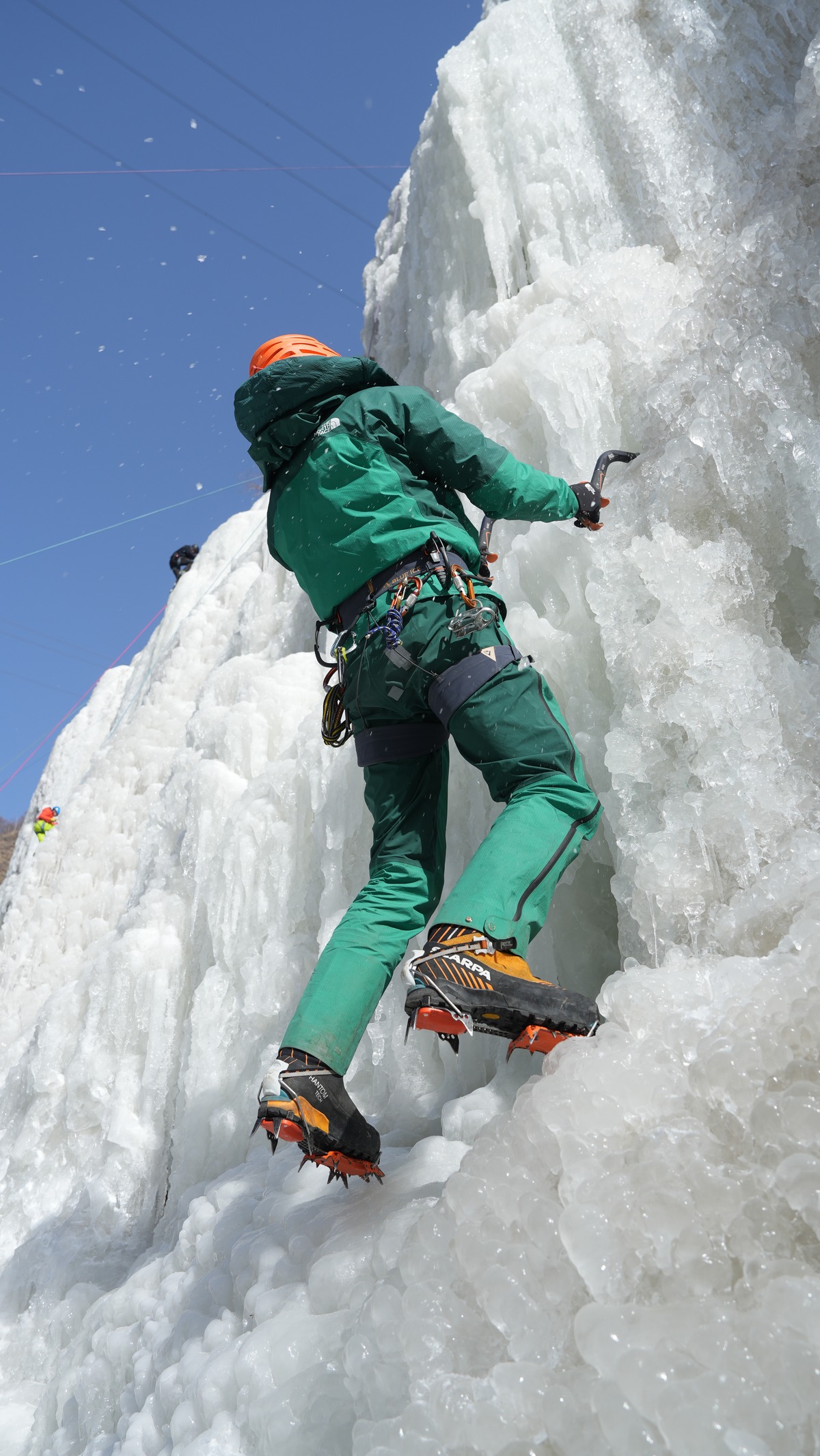
Hats, gloves, and a few other small pieces — designed for ice and snow — can make a cold day feel warmer and more manageable.
Ice climbing, put simply, is climbing ice walls or frozen falls with proper gear. It grew out of glacier and ice-slope travel in alpine mountaineering and is now its own demanding, highly visual sport: rock-climbing movement, reading ice and weather, and serious fitness. People sometimes call it “ballet on an ice wall.”
That cool factor sits next to hard focus and a steady push upward — deep cold, flying ice shards, a body that has to stay precise. In that environment, the small kit matters as much as the big shell.
Thin beanie inside the helmet (and a light neck piece)
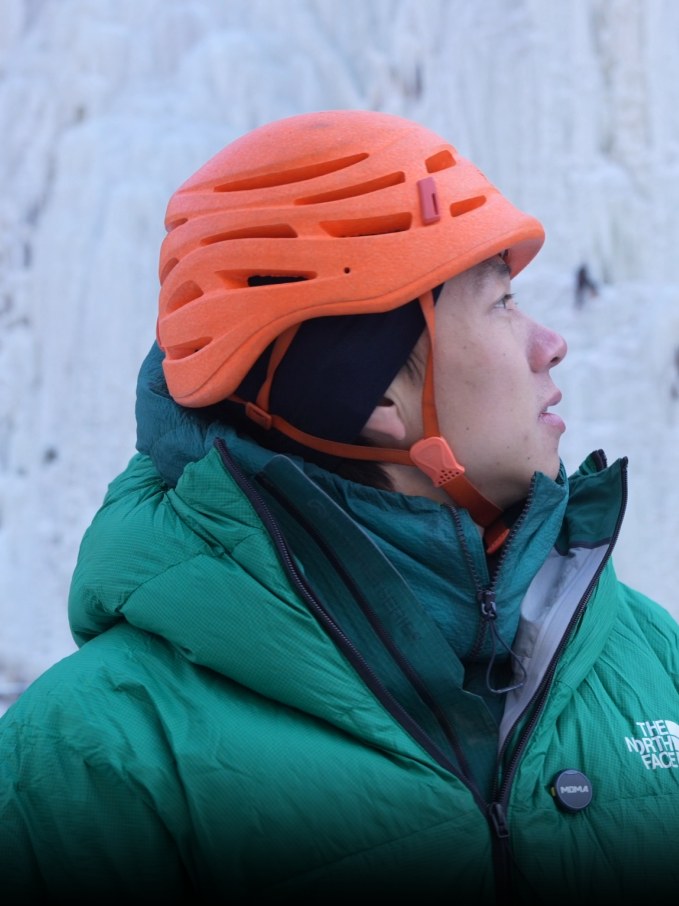
On the ice, a real climbing helmet is non-negotiable — shards from above are no joke. The helmet itself, though, is rarely warm. That is where a thin, stretch beanie earns its keep: light, elastic, close to the head, under the lid. The same idea works inside a ski helmet. A light, stretchy neck piece does a similar job for the collar gap.
In the store, a helmet-friendly option is the 17.5μm Single Layer Merino Wool Beanie (150g). For the neck, a light stretch scarf such as the 17.5µm Merino Wool Single Layer Scarf (150g) sits in the same “thin and stretchy” lane. Try the stack at home with your own helmet before a cold morning.
Thick beanie stays out
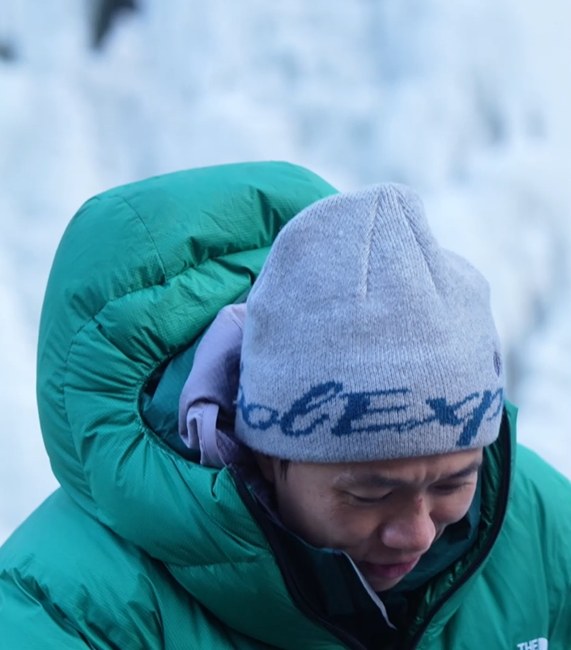
A bulkier winter beanie is a different hat. Extra volume usually will not play nicely under a hard shell. Keep it for winter travel, town days, and any outing where you leave the helmet behind — warmer and more comfortable when there is no lid fighting for space.
Examples: 17.5μm Double Layer Merino Wool Beanie (200g) or a Cold Mountain warm beanie.
Liner gloves when the shell comes off
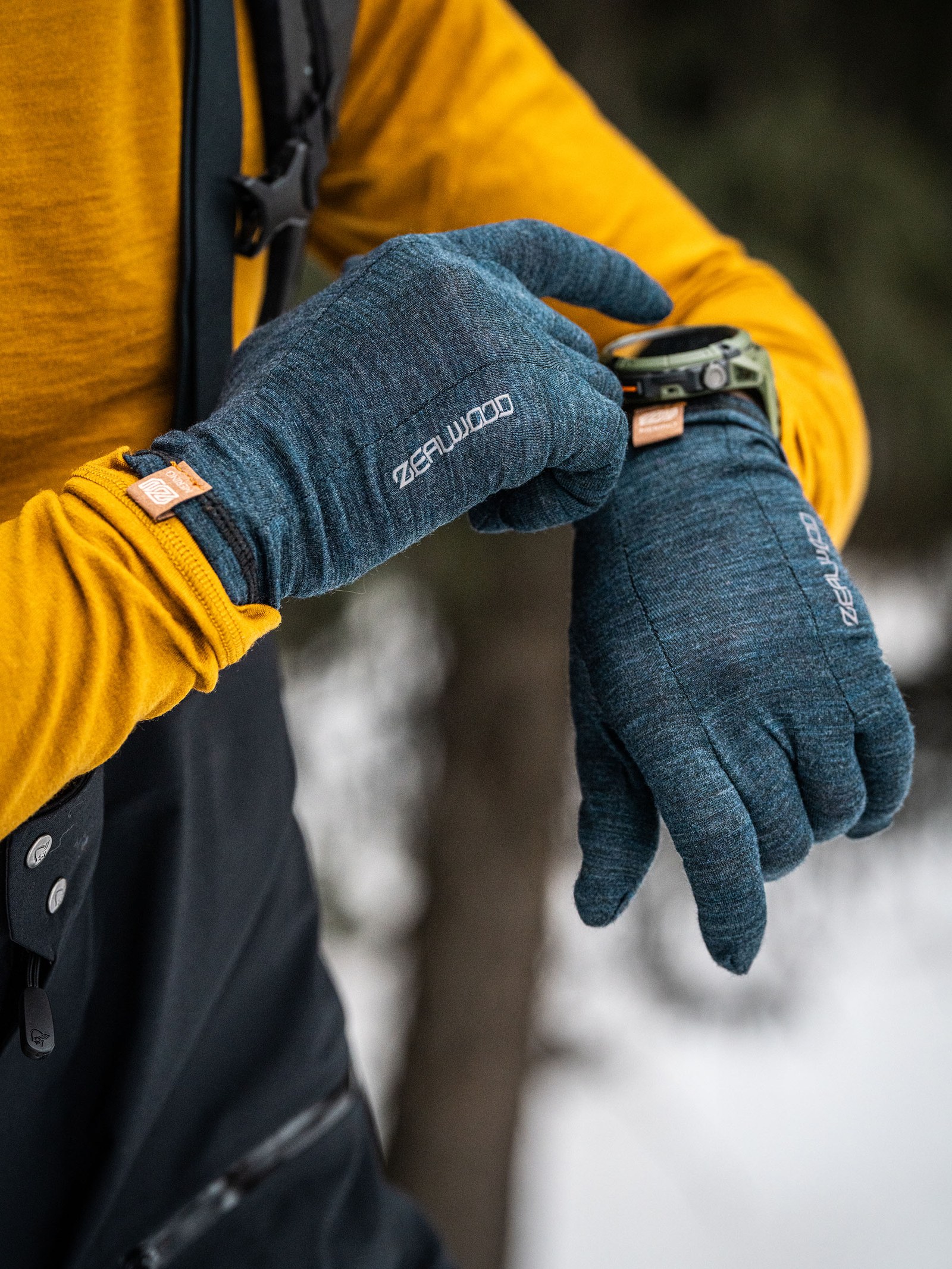
Thin liner gloves give basic warmth on ice or ski days and help many people keep the hand feeling drier than cotton. When you peel off a bulky waterproof shell to rest, use a phone, or drink, the liner can stay on so the hand does not dump heat straight into the wind.
We treat that job with the Lightweight Merino Wool Outdoor Gloves. Exact knit, sizing, and touchscreen options live on the product page — this post stays light on yarn specs.
ALPINE PRO socks for kicking ice
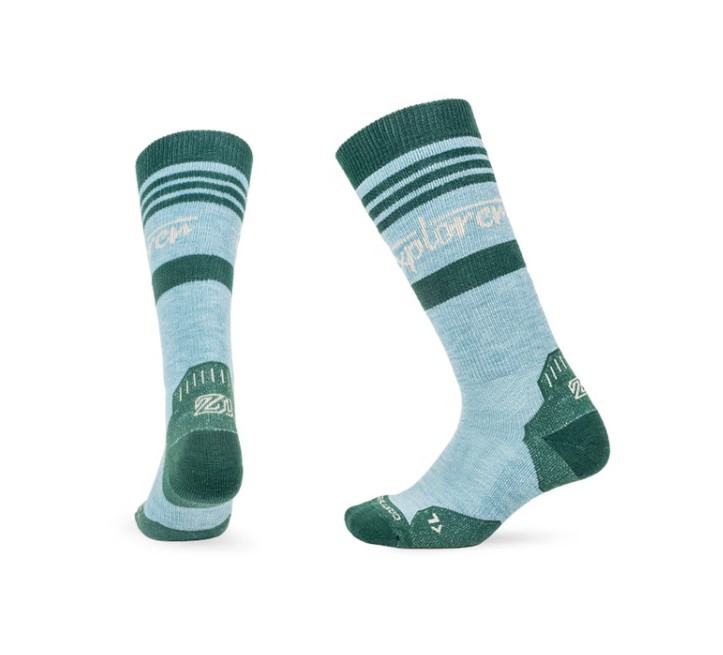
When you kick up the ice, a damp foot hurts precision. Dry and warm under the boot matters. A heavy merino alpine sock with denser knit at the heel and sole for cushion, plus a mid-calf cuff that helps hold the sock up and protect the ankle, is built for cold approaches and outdoor boots — not as a fashion crew.
On the store that lane is the ALPINE PRO series: ALPINE II Merino Wool Crew Socks Winter. Materials and sizing are on the PDP.
250 g next to skin for ice stop-start
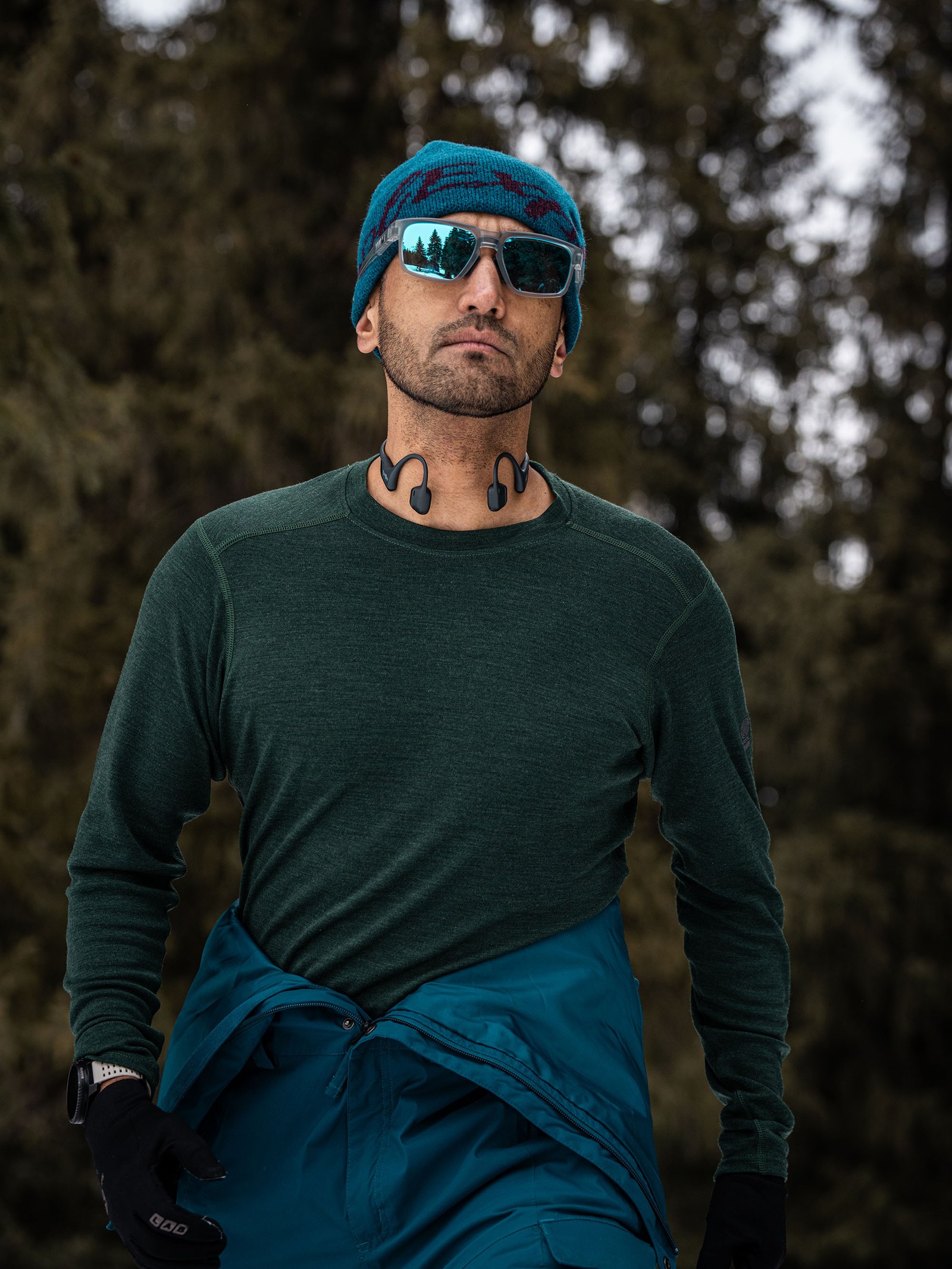
On ice, swinging tools often runs hot and sweaty; standing still to read the line dumps you back into the cold. A ~250 g merino base layer next to skin is one way many climbers buffer that swing. Merino can hold around / up to about 35% of its own weight in moisture and still feel warmer than a soaked cotton layer for many wearers — then move vapor out as conditions allow. The fiber’s loft also helps trap a thin air buffer between skin and the cold. Fit, pace, and how wet the rest of the system already is still matter; treat the percentage as a fabric property note from our ice/snow guidance, not a guarantee for every hour on the wall.
Examples: 16.5μm Men’s Long-Sleeve Stand Collar Merino Wool Base Layer (250g) and 16.5μm Women’s Long-Sleeve Merino Wool Base Layer (250g).
Ski stop-start and ~200 g
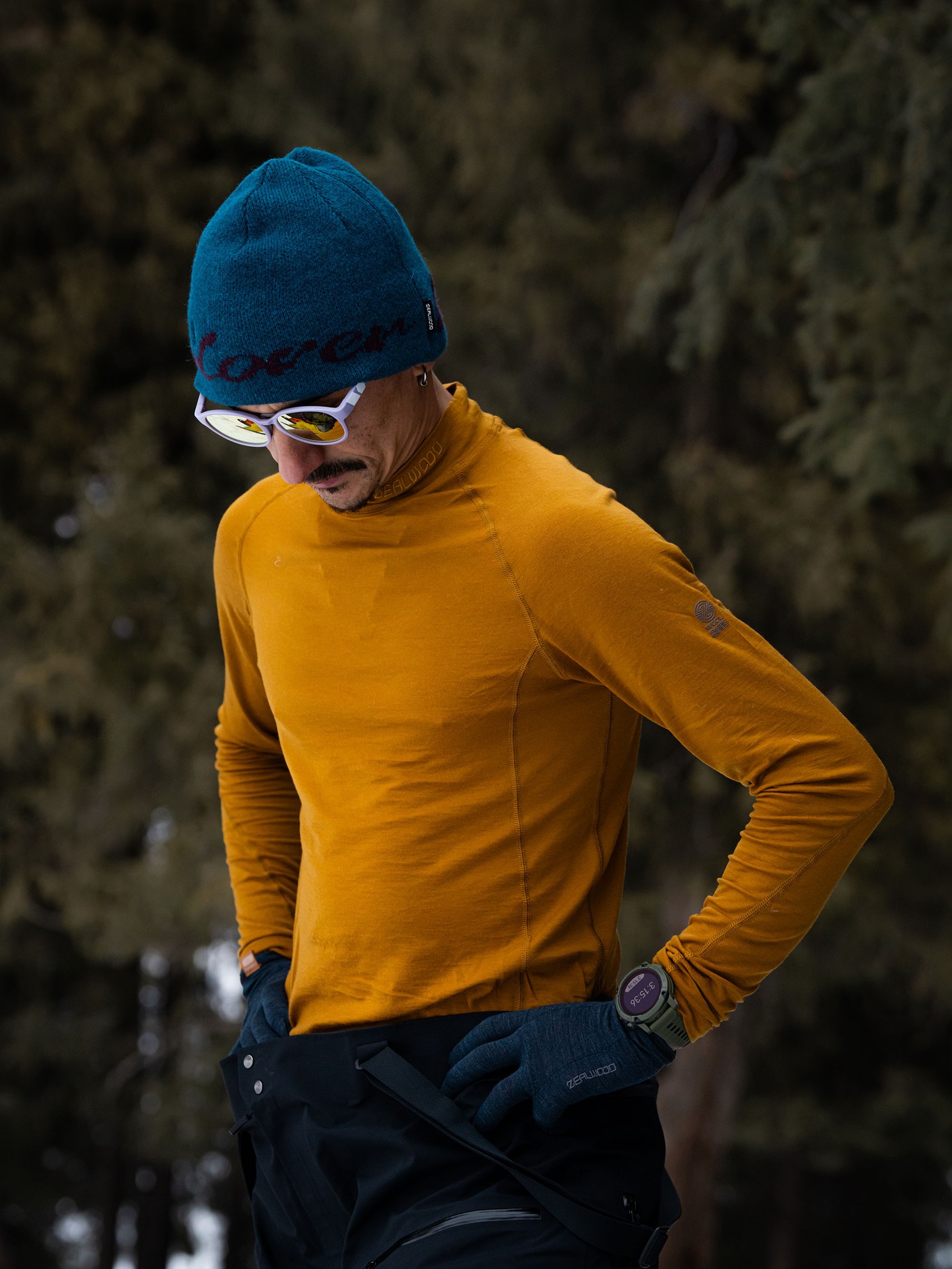
Skiers know the same pattern in a different costume: hot when you ski, cold when you stop. A ~200 g/m² merino base layer aims at the middle — enough warmth for the chair, enough breathability when you are moving. Stretch and cut differ by style; check the product page for fabric content and fit rather than treating a blog line as a universal spec.
Example for milder stop-start days: 17.5µm Women’s Long-sleeved Round Neck Merino Wool T-shirt (200g). Men’s midweight zipper options are on the store when available — confirm content on the PDP.
Ski and snowboard sock lines
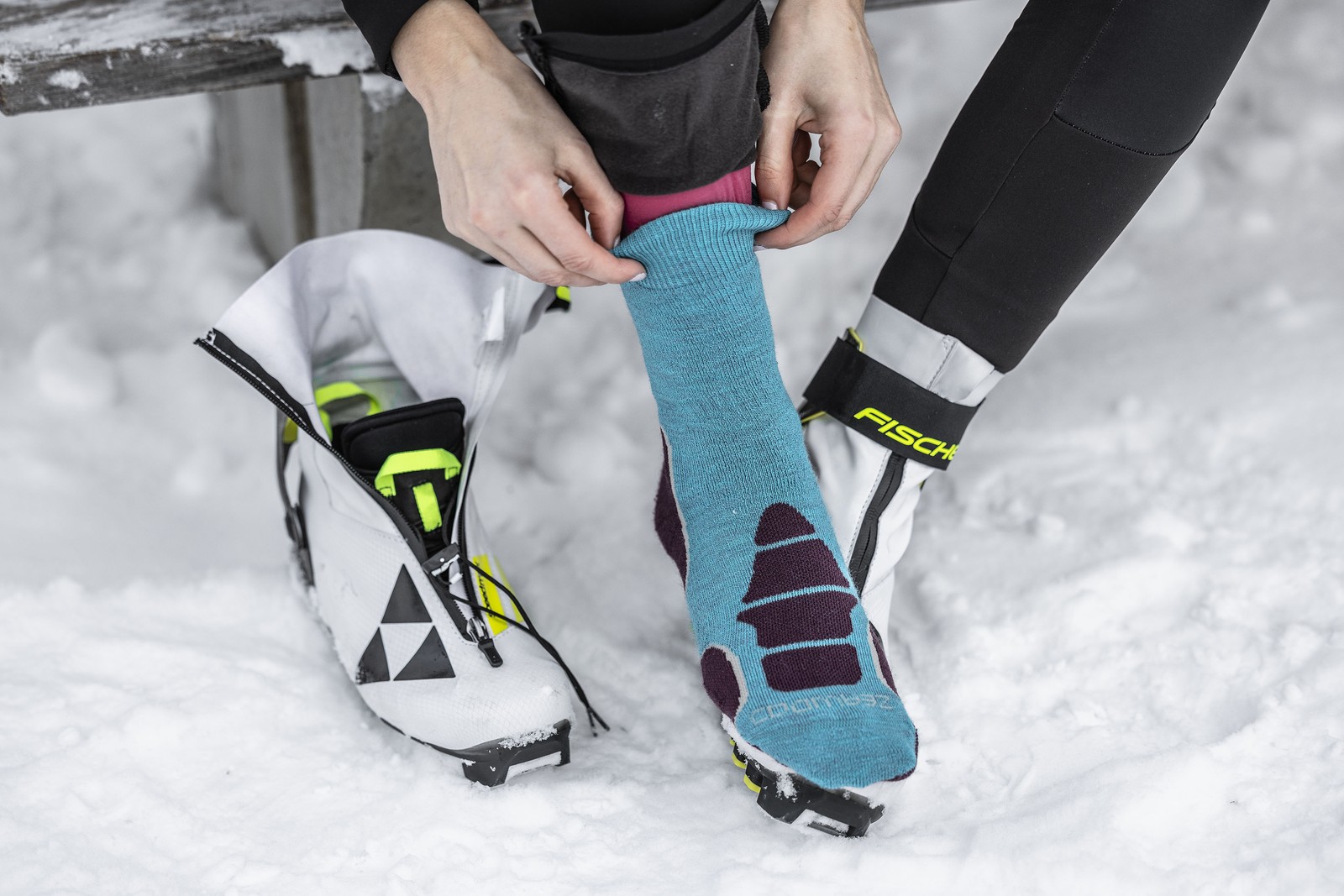
We also carry ski socks aimed at alpine and snowboard days — cushion vs race-leaning builds, taller cuffs, and merino for a drier feel through a closed boot. Construction details (bind systems, toe seams, heel reinforcement) live on each PDP; this note stays light.
Available now:
- SKI PATTERN I Merino Wool Crew Socks
- SKI PATTERN II Merino Wool Crew Socks
- S1 SKI 2 Merino Wool Knee Socks Winter (ski / snowboard tagged)
Closing
Ice hanging on a wall, silver slopes, snow bands woven across winter hills — may every ice and snow day still hold its own clean line of fun.
Small layers under the shell: thin beanie inside the helmet, thick beanie for town, liner gloves when the waterproof hand shell comes off, alpine socks for hard cold under the boot, and a base weight that matches stop-start ice or ski. Then enjoy the day.
Originally published on Wool Explorer. Adapted for ZEALWOOD.
发表回复