

Many styles are currently on sale. Standard shipping is a flat $8 USD. Shipping policy

zealwool


Author: admin

  • Hot on the Climb, Cold at the Overlook

    Hot on the Climb, Cold at the Overlook

    The climb warms you up. You unzip, maybe peel a jacket, and keep moving in the layer next to your skin. Then you stop — a windy overlook, a snack, a photograph — and the air feels colder than the forecast. If that first layer is damp, the swing feels sharper still.

    This is a trail note on that problem: why the base layer decides how the swing feels, and how to choose between a midweight merino base (around 200 g) and a slightly heavier one (around 250 g). It is not a merino-T essay for a travel day that flips seasons — that is already in A Merino T for a Day That Will Not Stay in One Season. And it is not a head-to-toe winter packing list.
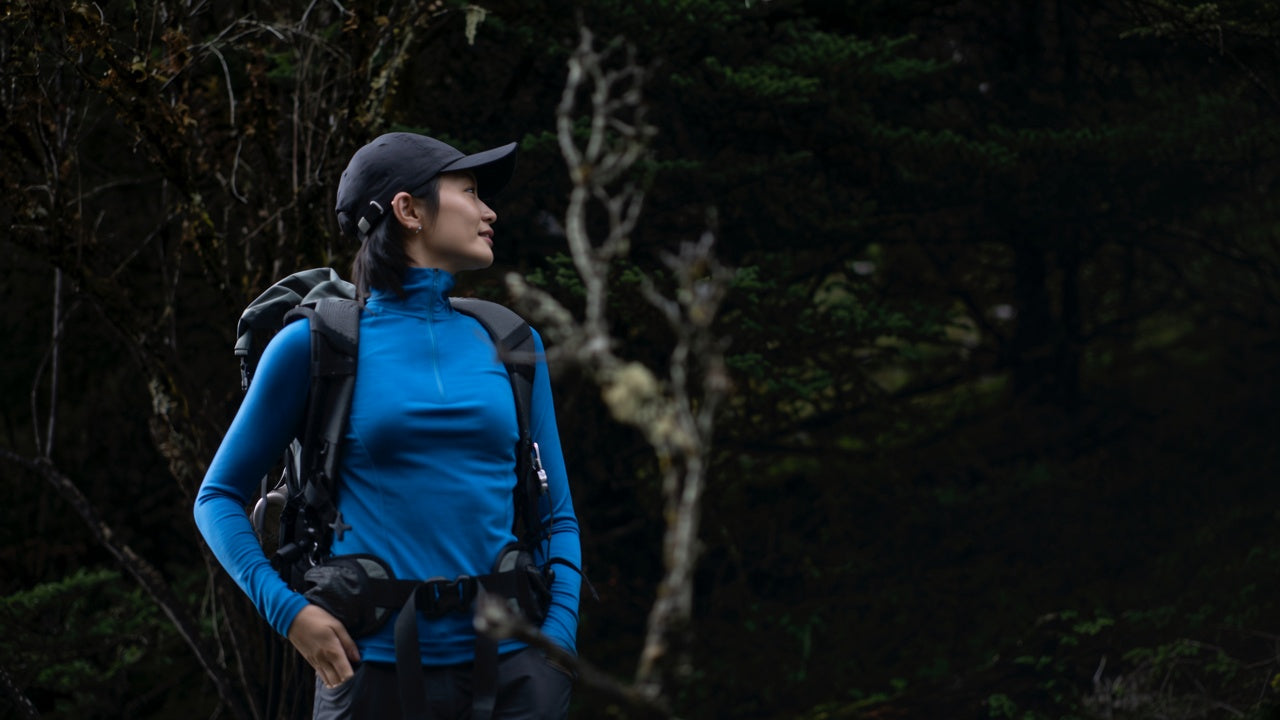
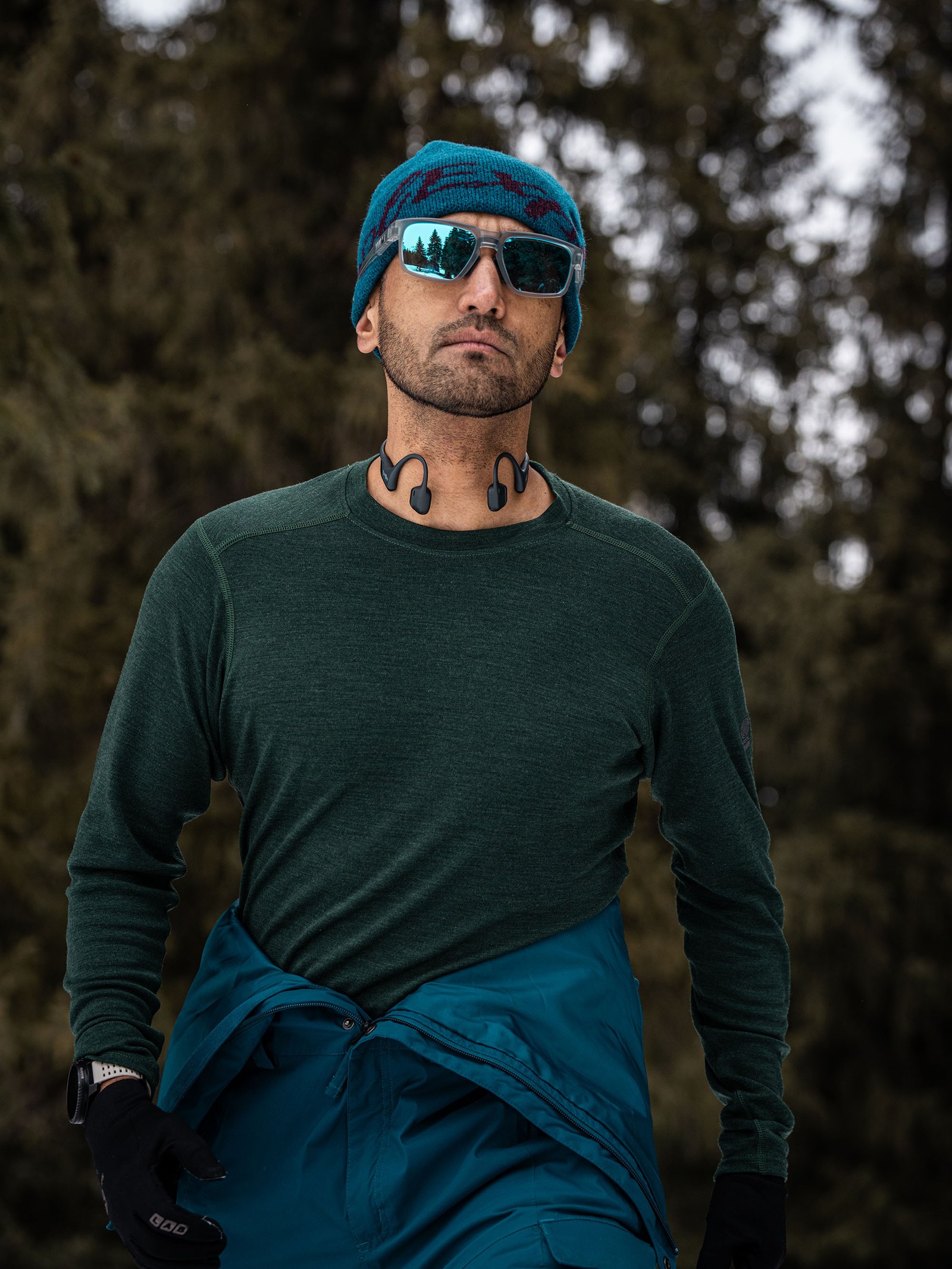
    Hiker in a merino zip-neck base layer on a forest trail

    Three jobs, not three jackets

    Outdoor layering is usually described as a three-layer system. The useful way to hear that is as three jobs, not a rule that you must wear three jackets all day.

    • The base, next to the skin, should move sweat and heat off the surface so you do not chill as quickly when you stop.
    • The mid layer holds warm air close to the body. It is the piece you are most likely to take off on the climb and put back on at the overlook.
    • The shell stands between you and wind, rain, or snow, while still letting extra moisture leave the system.

    You can combine two jobs in one piece, or use two pieces for one job. What matters is stacking for the place and the weather you are actually walking into.

    Why the base decides how the swing feels

    The base sits on skin, so what happens there becomes how the day feels. Warmth alone is not enough. Under the arms and along the back, heat and moisture can collect. If they stay in the next-to-skin layer, a stop in the wind often feels like a small cliff.

    Merino is a common outdoor choice for that first layer. The fiber’s natural crimp helps trap still air for warmth, and merino next to the skin often feels more comfortable than cotton as you heat up and cool down. That is a field habit, not a guarantee: merino can still feel wet when it is truly soaked, and it will not replace a shell in real wind or rain. We have written more honestly about that in Wool Is Not a Miracle Fiber and Does Merino Dry Fast?.

    Midweight, or slightly heavier

    For a day with a real climb and a real pause — a fall trail, a winter hike, a stop-start outing — a midweight merino base, around 200 g, is usually a solid starting point. It is warm enough for the overlook if you add a mid and a shell, and easy enough to move in on the way up.

    If the day is clearly colder, slower, or you expect to stand longer in the wind, a slightly heavier merino base, around 250 g, can sit under the same mid and shell. Exact fabric details live on each product page; this blog stays with the simple midweight / slightly heavier split.

    Browse the men’s merino base layers and women’s merino base layers, or start with these in-stock pieces:

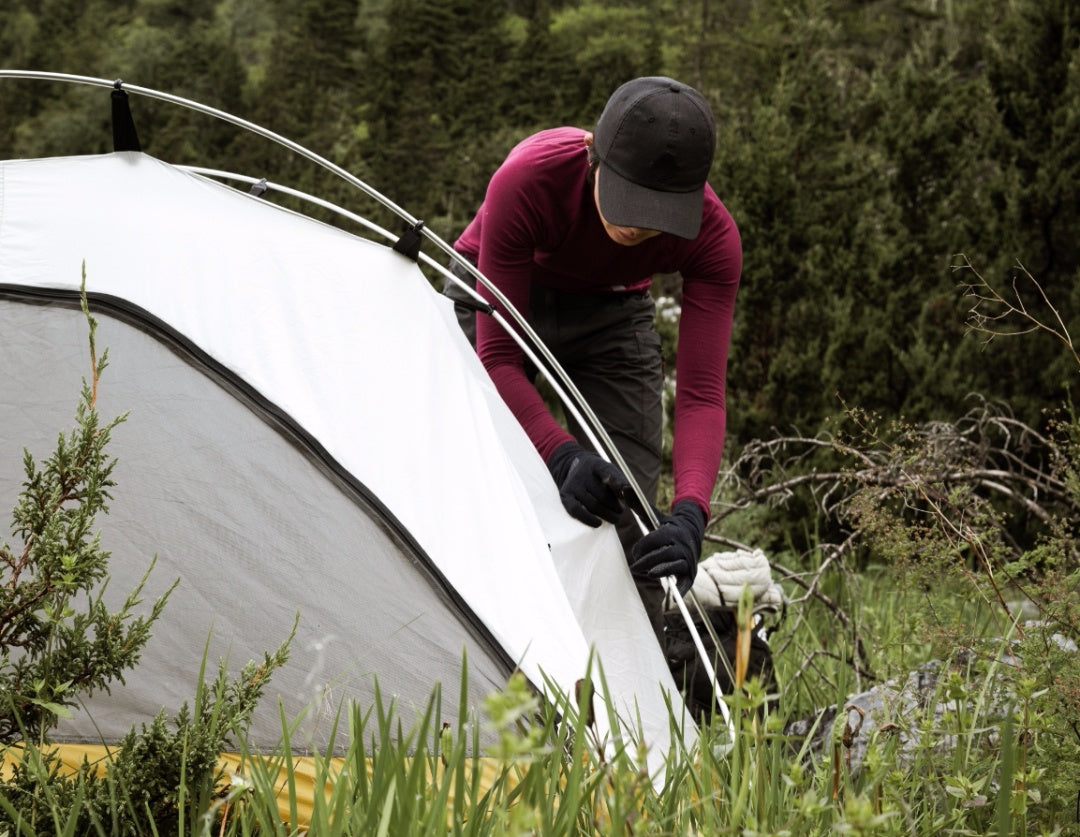
    Pitching a tent in a merino long-sleeve after the climb
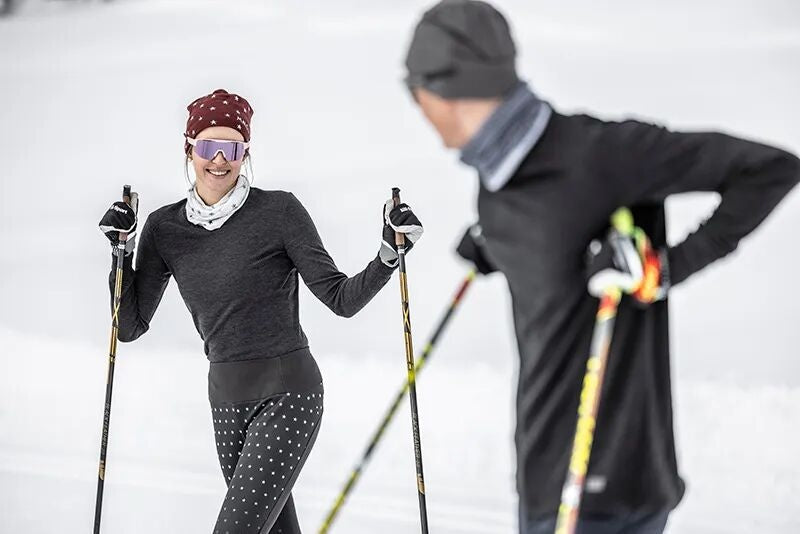
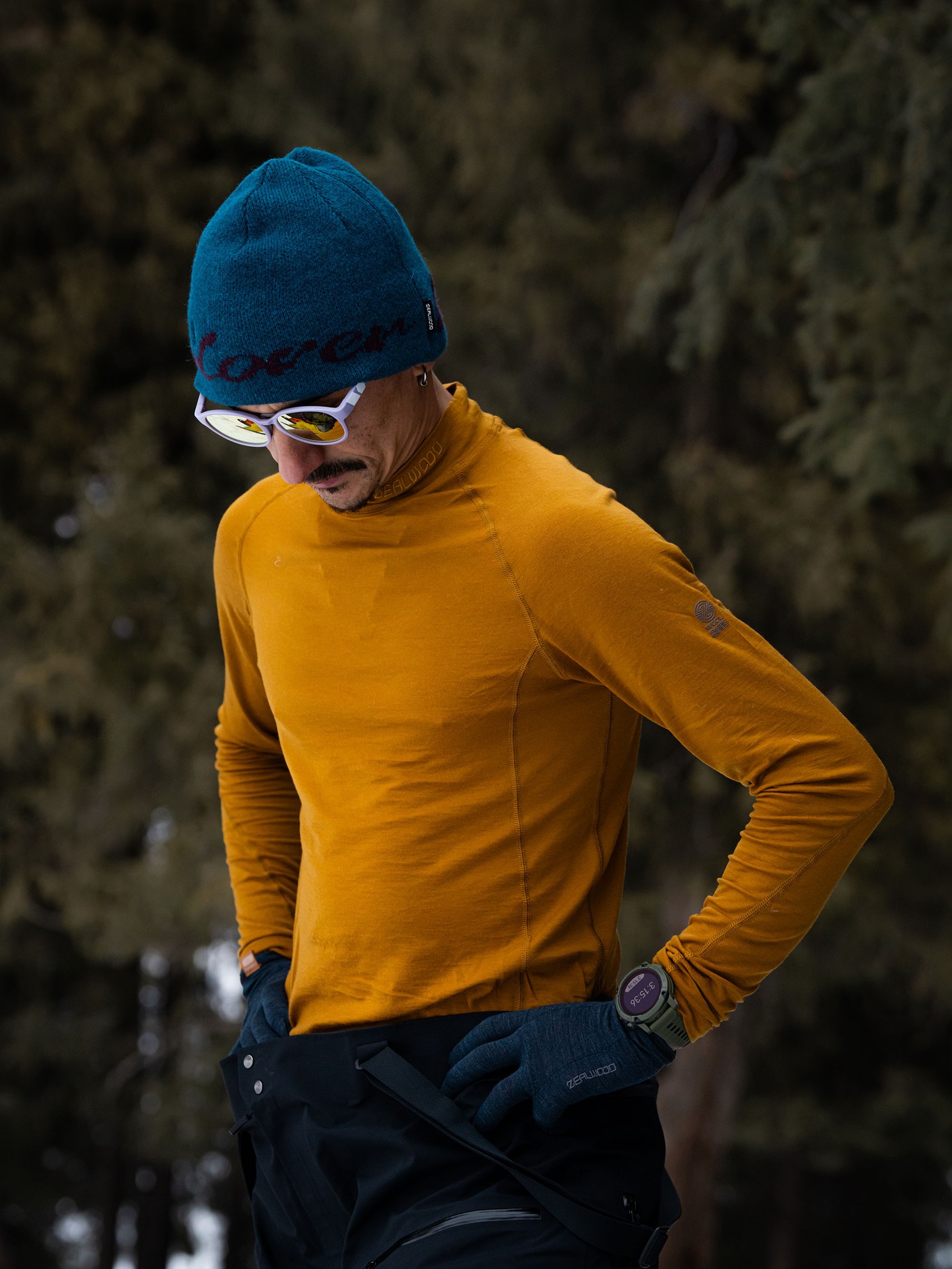
    A pause on snow in merino bases — the swing after the effort

    A mid you can shed, and a shell for the stop

    Once the base is right, the rest of the system is mostly timing. Peel the mid on the climb; put it back on when you stop. Add the shell when the wind or weather asks for it — not because a checklist said you must wear three pieces all day.

    Hats and gloves matter on cold stops too, but we already covered the under-helmet, liner-glove, and ski-sock kit in Ice and Snow Small Kit. This note stays with the base.
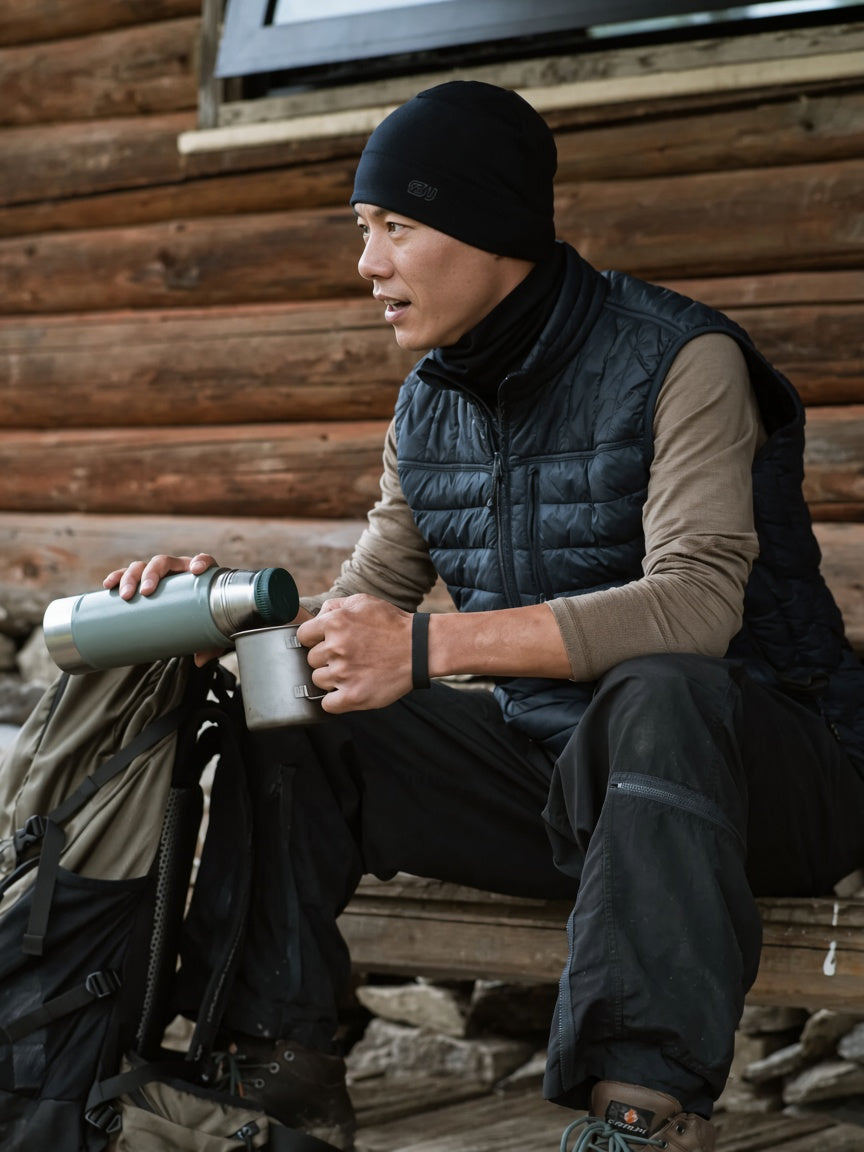
    A mid layer at a cabin stop — the piece you put back on
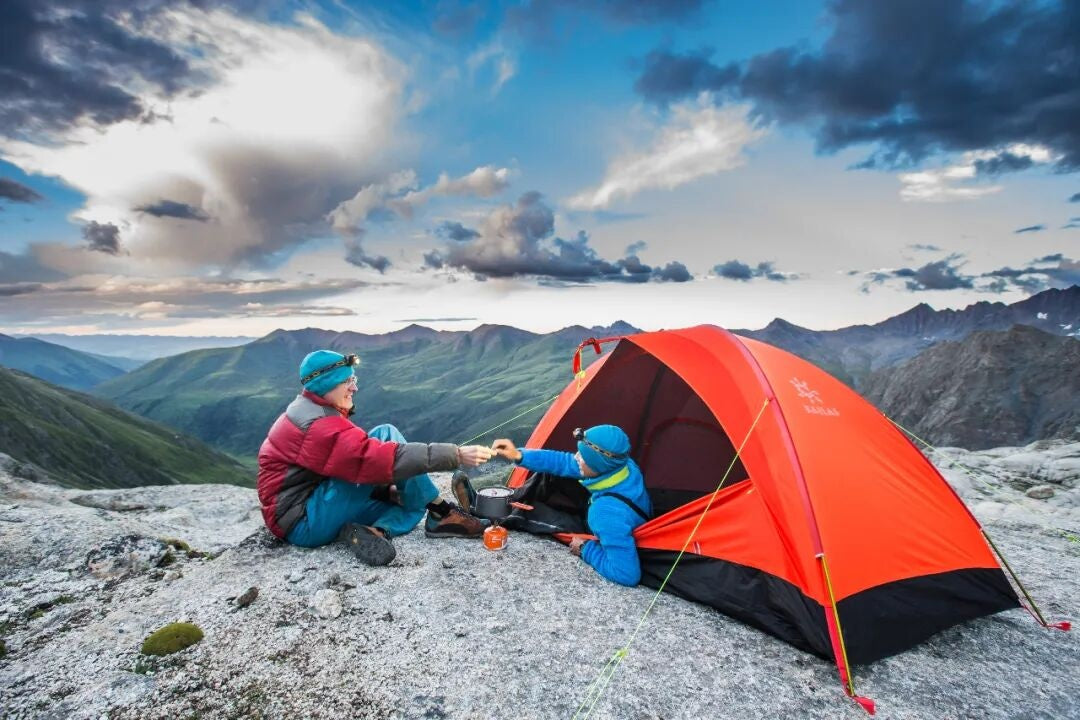
    A mountain camp: the stop after the climb

    Closing

    When the forecast, or your own effort, creates a personal weather change, rebuild from the skin out: a merino base that can handle the climb, a mid you can shed, a shell for the stop. It is not magic. It is just a more comfortable way through a day that will not stay at one temperature.

    Follow each item’s care label.

    — WOOLEXPLORER editorial · adapted from ZEALWOOD WeChat《不是巨热就是巨冷,羊毛贴身层帮你抵御断崖式降温》(2023-11-10)
  • Why There Are No 100% Wool Socks

    Why There Are No 100% Wool Socks

    Most wool socks on the market are not 100% wool, because a sock is usually knitted from several yarns, not a single pure-wool thread from cuff to toe. At ZEALWOOD, we knit a wool main yarn with an elastane ground yarn and reinforce the heel and toe with nylon.

    First, keep two kinds of composition apart

    Yarn composition is what one yarn is made of — the main yarn can be 100% merino wool. Whole-sock composition is what the finished pair is made of once the main yarn, the ground yarn, the cuff elastic, and the heel-and-toe reinforcement are all counted. They are not the same thing.

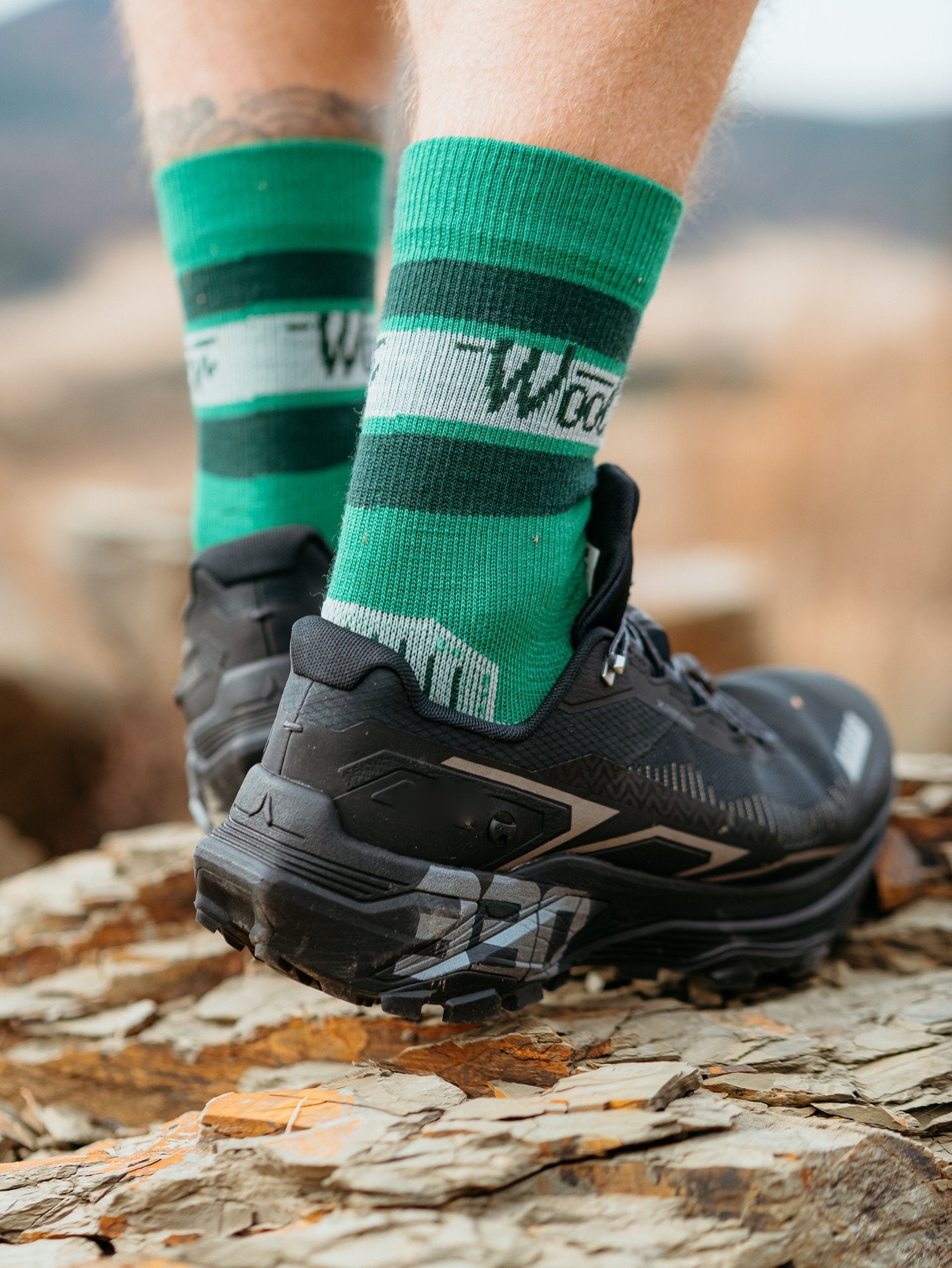
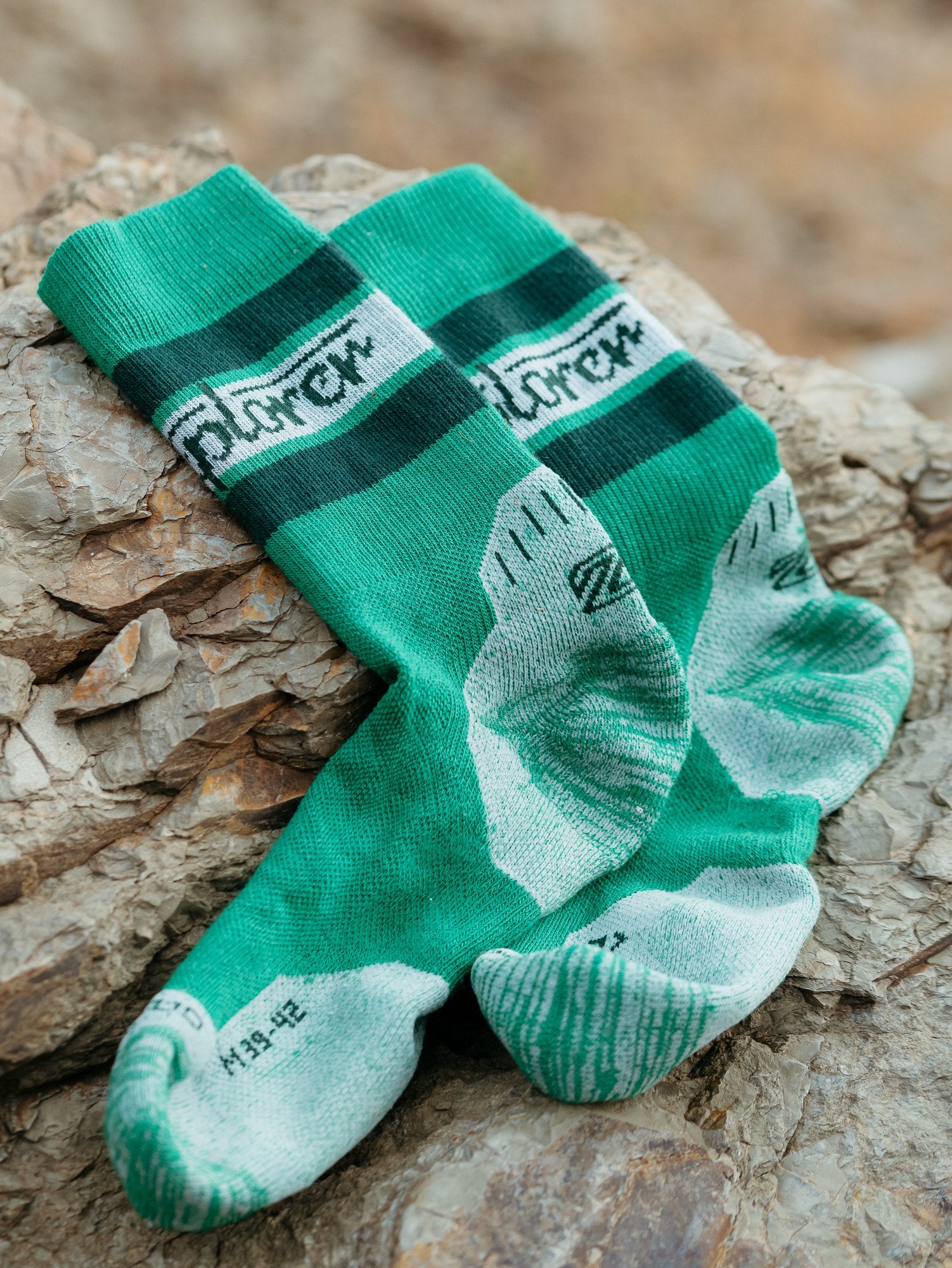
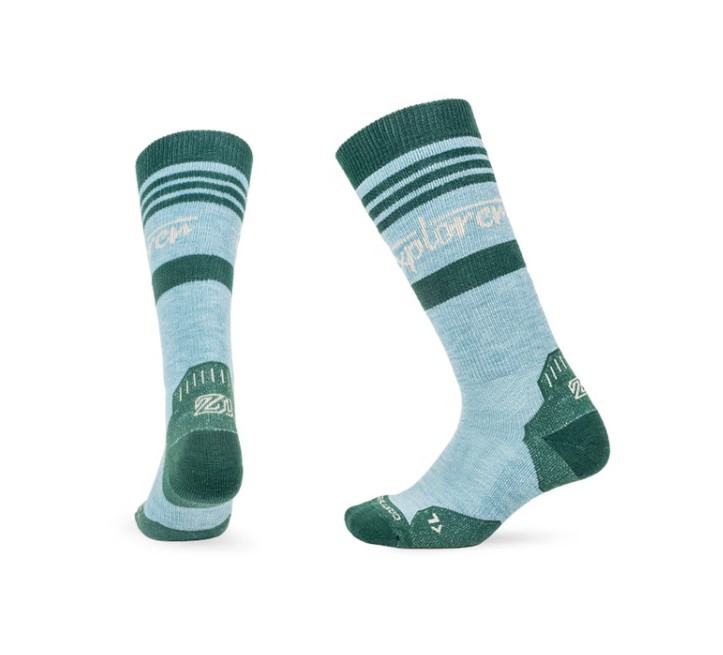
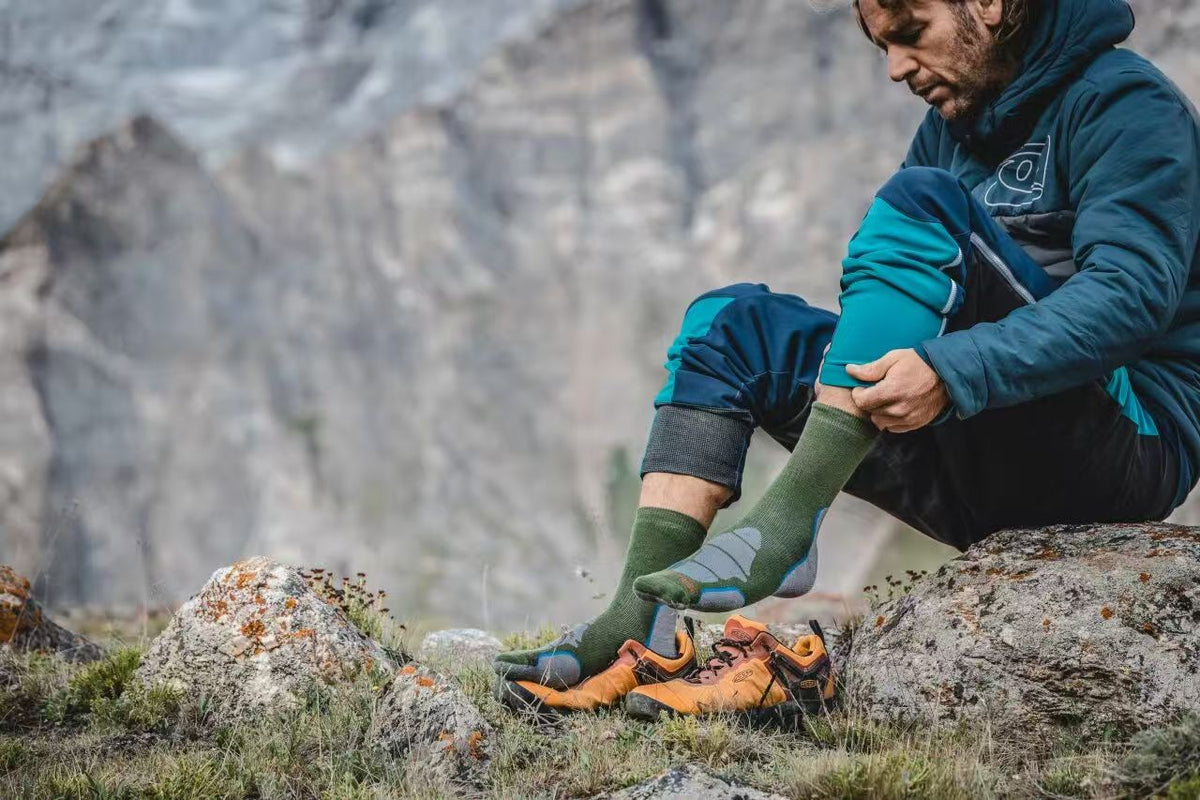
    Green merino socks on the trail

    Why most socks are blended

    Wool has a natural spring, but it does not stretch and recover the way elastane does. Without an elastic yarn, many socks loosen and slide down.

    Inside the shoe, the heel and toe take the most friction and wear through first. Nylon is abrasion-resistant, so many socks add nylon there.

    In a blend, wool takes care of next-to-skin comfort, warmth, and moisture management, while nylon adds strength and abrasion resistance. Untreated wool can also felt and shrink.

    Socks are often knitted with a plating method, feeding the main yarn and the ground yarn together, with the elastic yarn behind the main yarn. So blending is not a shortcut — it is how most socks balance fit, durability, and the comfort of wool.

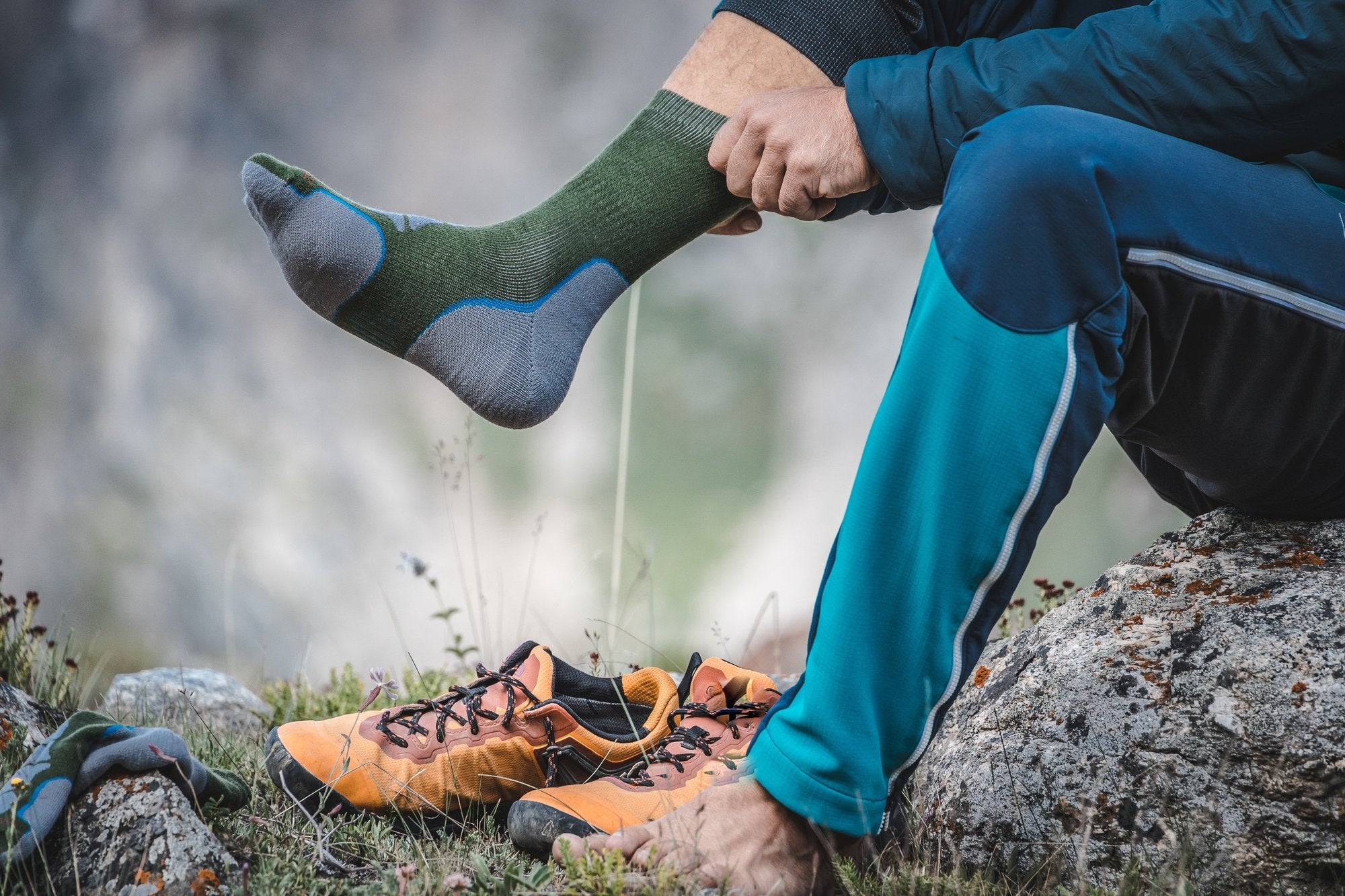
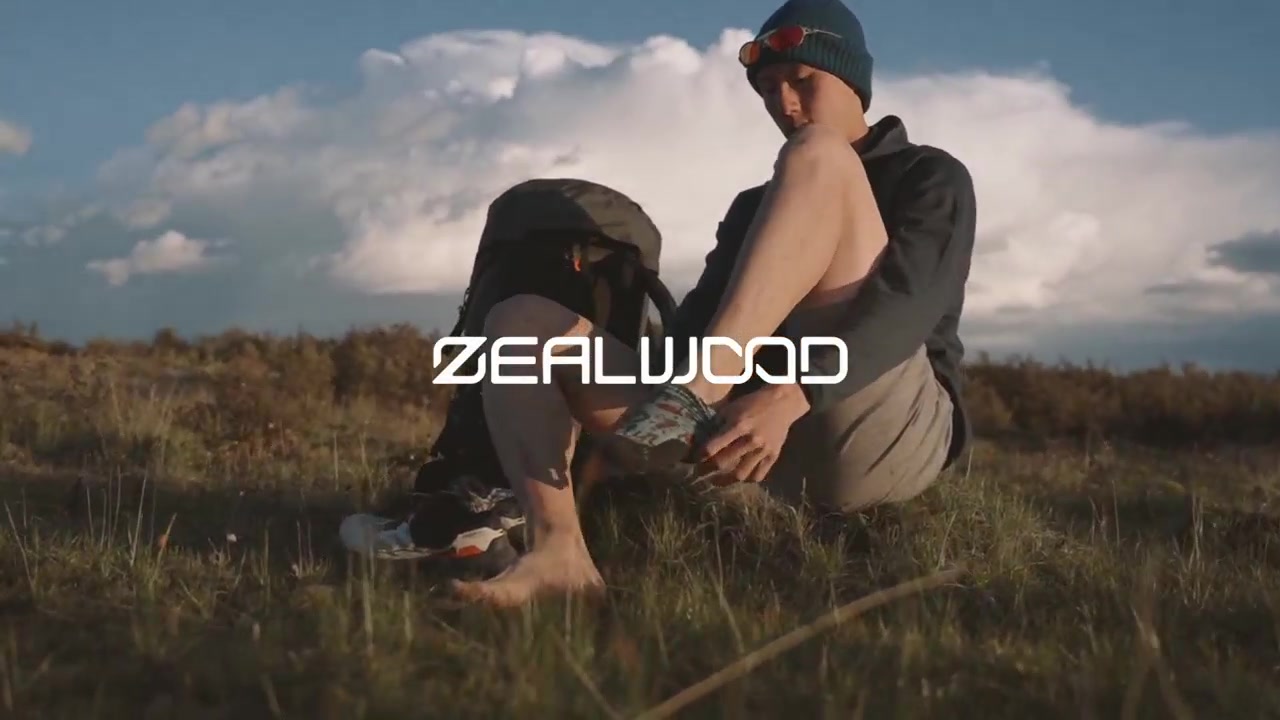
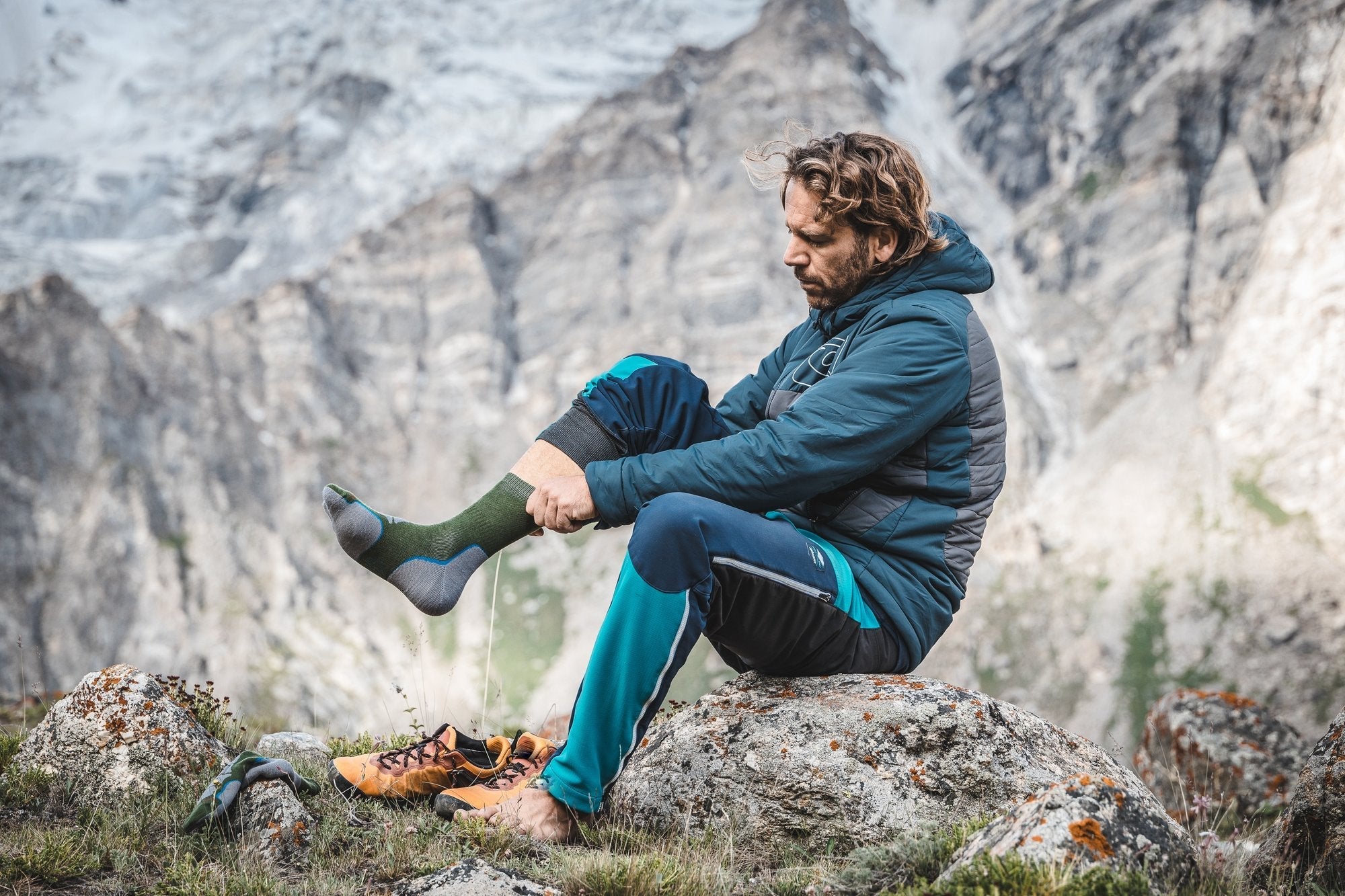
    Pulling on a merino hiking sock

    What the wool percentage on the label actually means

    The wool percentage on the label is the total of every yarn in the finished pair — it does not mean the merino yarn was watered down. A label can list merino wool plus nylon and elastane, and the main yarn itself can still be 100% merino wool.

    Thin socks and running socks often show a lower wool percentage: the sock is thinner, there is less wool overall, and the ground and reinforcement yarns take a larger share of the weight.

    On the same pair, a sole figure and a whole-sock figure can both be right, but they measure different things and should not be compared. When you see a wool percentage, first check whether it refers to the whole sock or one area.

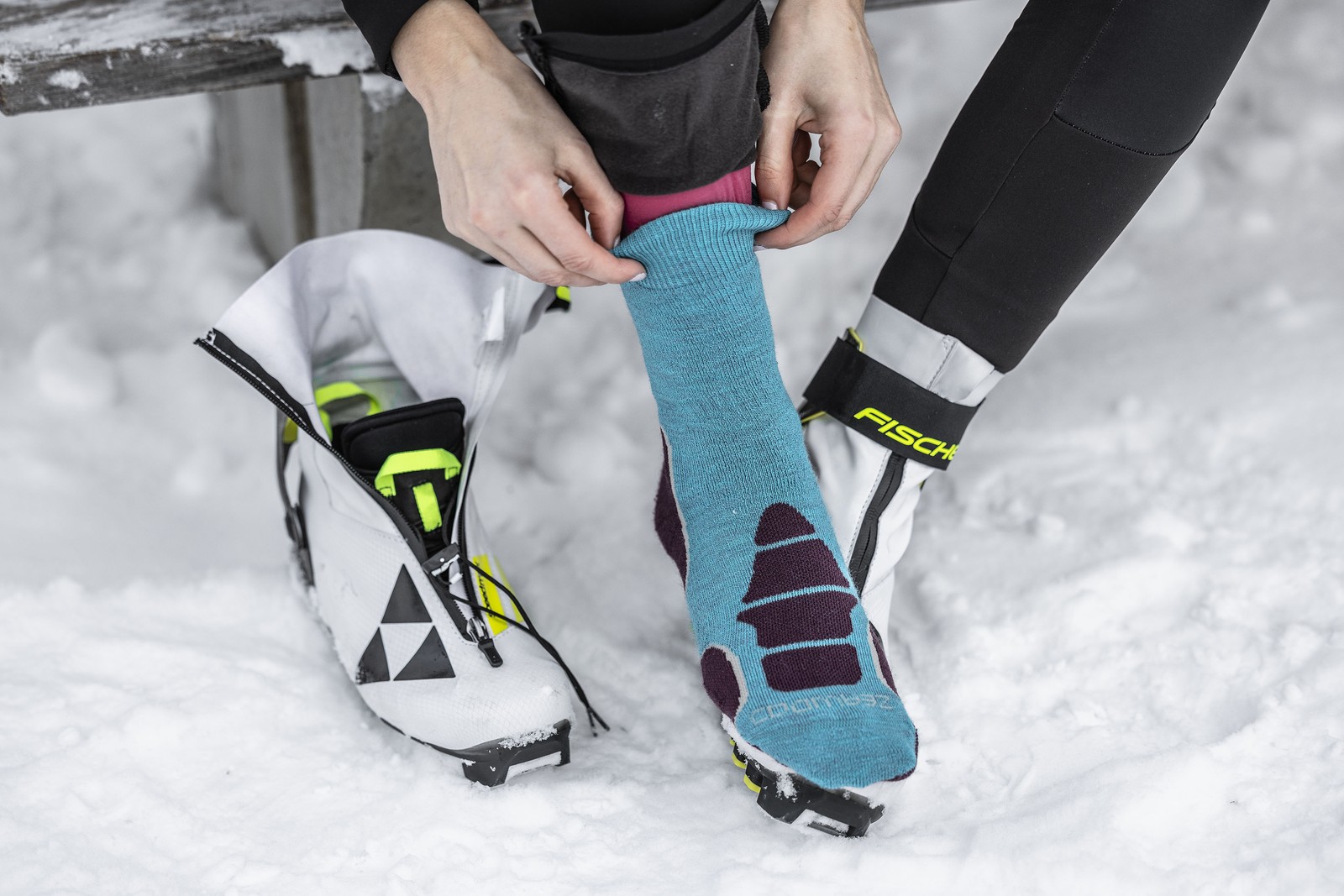
    Putting on merino ski socks

    How ZEALWOOD builds a merino sock

    This is our approach — other brands build socks differently. A ZEALWOOD sock is built from several yarns, each with its own job:

    1. Main yarn — wool. The yarn you see and feel on the face of the sock.
    2. Ground yarn — elastane for stretch. Plated behind the main yarn so the sock stretches on and recovers.
    3. Cuff — elastane elastic. Helps the top of the sock stay in place.
    4. Heel and toe — wool main yarn, reinforced with nylon. We do this on every ZEALWOOD sock, including our R series and PATTERN TRAINING.

    Apart from the R series and PATTERN TRAINING, every series uses a 100% wool main yarn. The finished pair still contains the ground yarn, cuff elastic, and heel-and-toe nylon, so we only say “100% wool main yarn,” and whole-sock composition follows the label.

    Even with a 100% wool main yarn, whole-sock wool percentages still differ, mainly with thickness, whether there is terry, and the ground-yarn specification — that does not mean the main yarn was diluted. Exact whole-sock blends live on each product page; this post stays light on yarn math.

    Same heel and toe, different body: R series and PATTERN TRAINING

    The R series and PATTERN TRAINING use the same heel and toe as our other socks, and the R series also uses merino wool in the sole. The difference is the body, which uses other fibers for hold:

    • R series (trail running): the older version has a polypropylene body; the newer version has a recycled nylon body.
    • PATTERN TRAINING: the body is recycled polyester ocean yarn.

    Because the body is most of the sock, the whole-sock wool percentage is naturally lower. That does not mean a lesser sock — it puts each fiber where it works best.

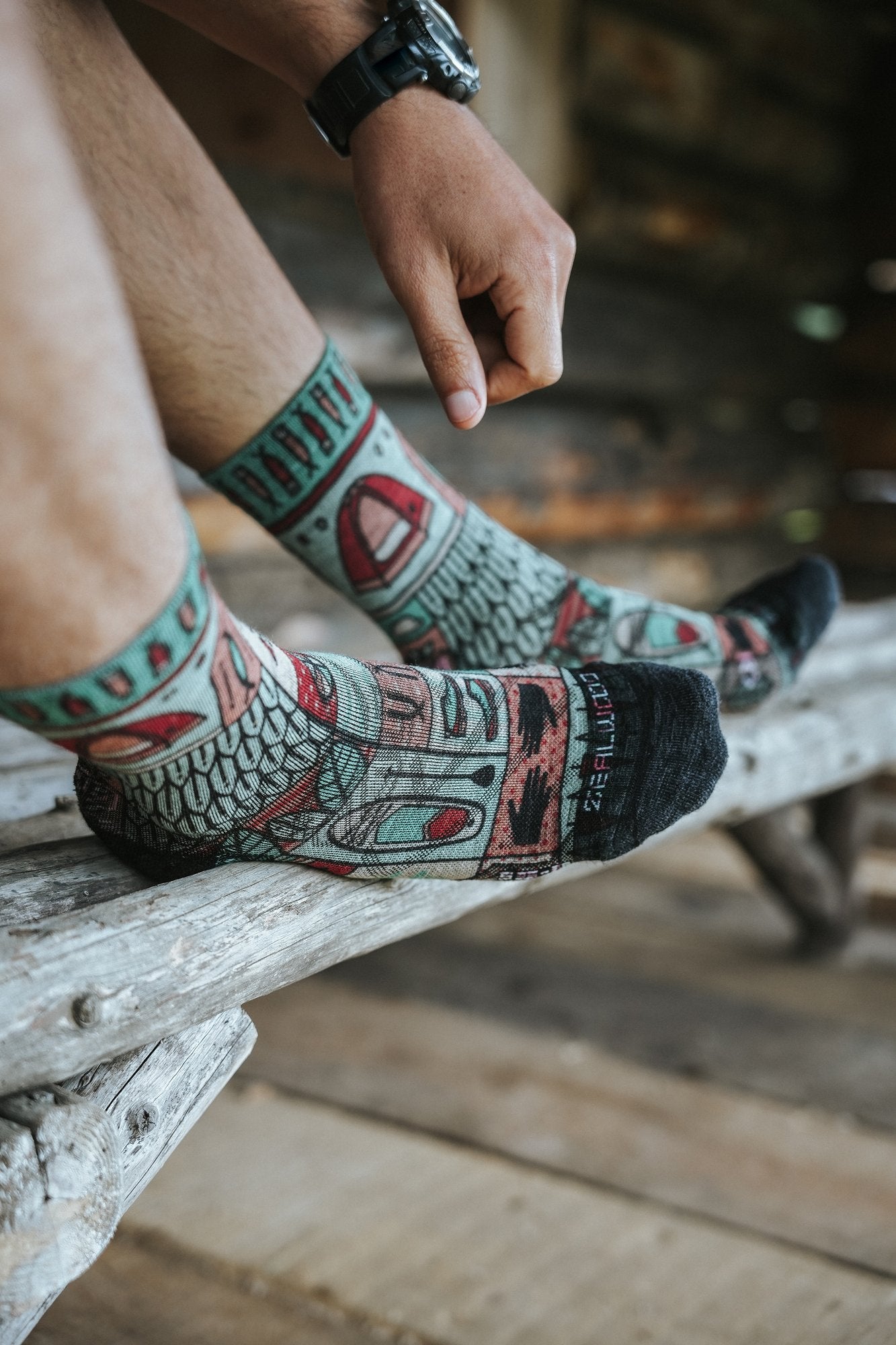
    Pattern merino socks after a run

    Choose by the activity, not by chasing a wool percentage

    For a long trip, pack two or three pairs and rotate them — the habit behind our Two-Sock Rule still helps when the first pair is damp at dinner.

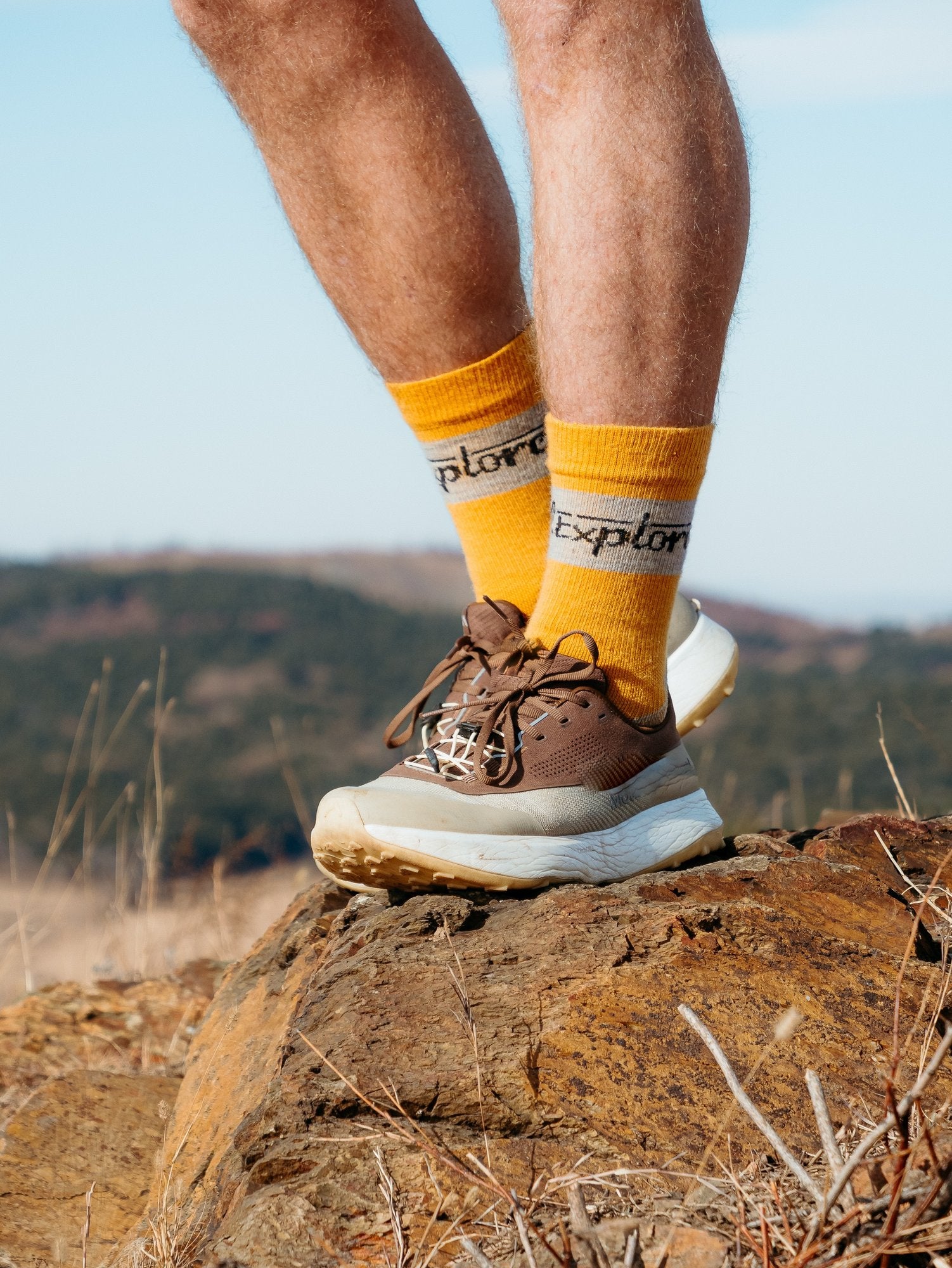
    Yellow merino socks on a trail overlook

    How to care for merino socks

    Our merino wool is shrink-resist treated before knitting, so most socks can be machine-washed and tumble-dried on low heat — always follow each pair’s care label. A few habits help them last:

    • Air before you wash. Wool often just needs airing out between wears.
    • Pick a wool or gentle cycle when you do wash.
    • Keep them out of strong direct sun while drying.
    • No tumble-dry symbol on the label? Dry flat, away from radiators and heaters.
    Air-drying merino socks after a hike

    Bottom line

    Most wool socks aren’t 100% wool because most socks are a team of yarns: wool for comfort and moisture management, elastane for fit, nylon where the wear happens. At ZEALWOOD, every series except R series and PATTERN TRAINING starts from a 100% wool main yarn, with a stretch ground yarn and nylon-reinforced heel and toe. Read the whole-sock label, check whether a percentage means the whole sock or one zone, and choose for the trip ahead.

    Now you know how a wool sock is built — pick the one for your trip: Hiking & Skiing socks / Trail Running socks

    ZEALWOOD · Wool Explorer · Wear Nature, Go Further.

  • Ice and Snow Small Kit: Under the Helmet to Ski Socks

    Ice and Snow Small Kit: Under the Helmet to Ski Socks

    Hats, gloves, and a few other small pieces — designed for ice and snow — can make a cold day feel warmer and more manageable.

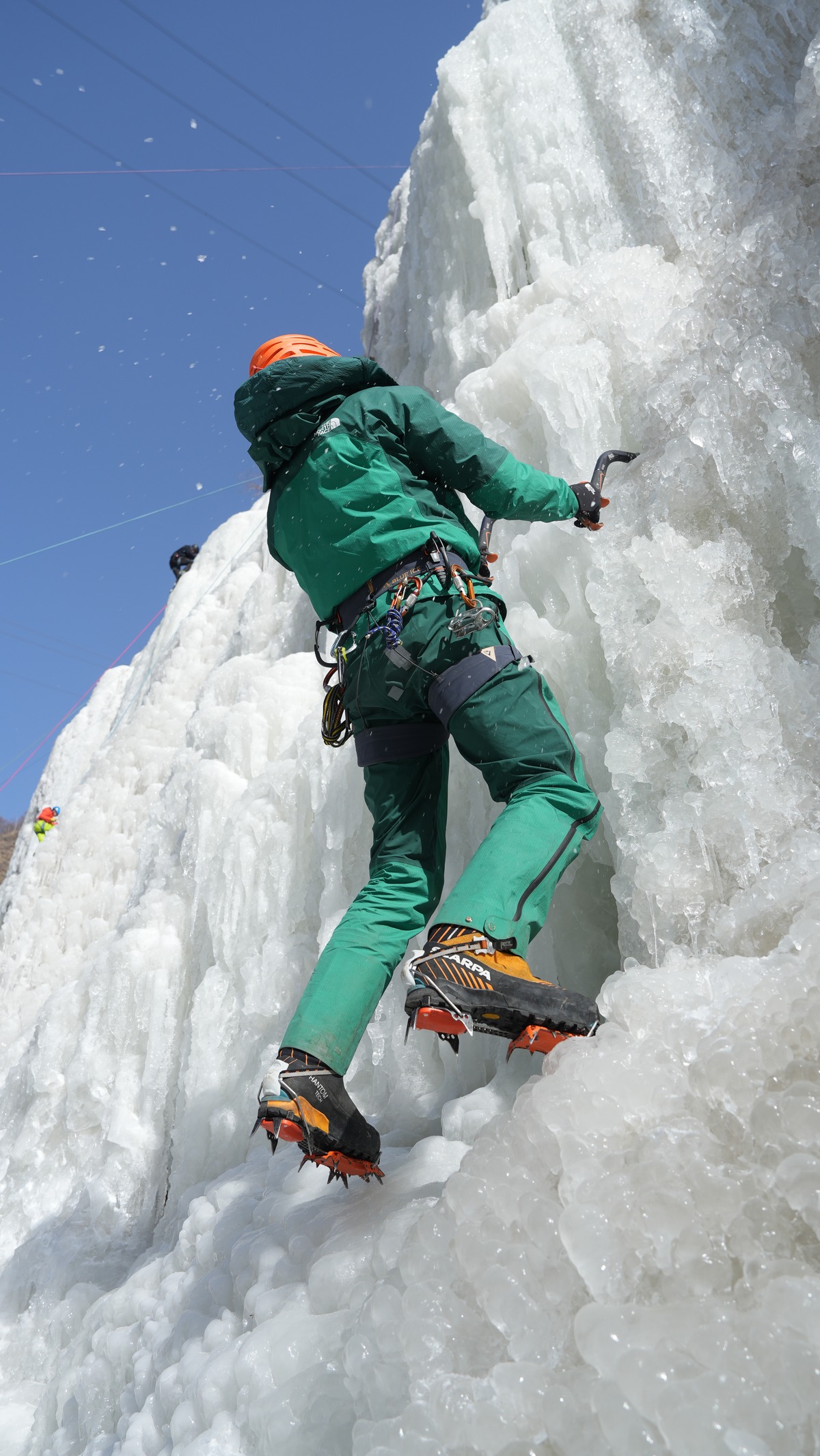
    Ice climbing, put simply, is climbing ice walls or frozen falls with proper gear. It grew out of glacier and ice-slope travel in alpine mountaineering and is now its own demanding, highly visual sport: rock-climbing movement, reading ice and weather, and serious fitness. People sometimes call it “ballet on an ice wall.”

    That cool factor sits next to hard focus and a steady push upward — deep cold, flying ice shards, a body that has to stay precise. In that environment, the small kit matters as much as the big shell.

    Thin beanie inside the helmet (and a light neck piece)

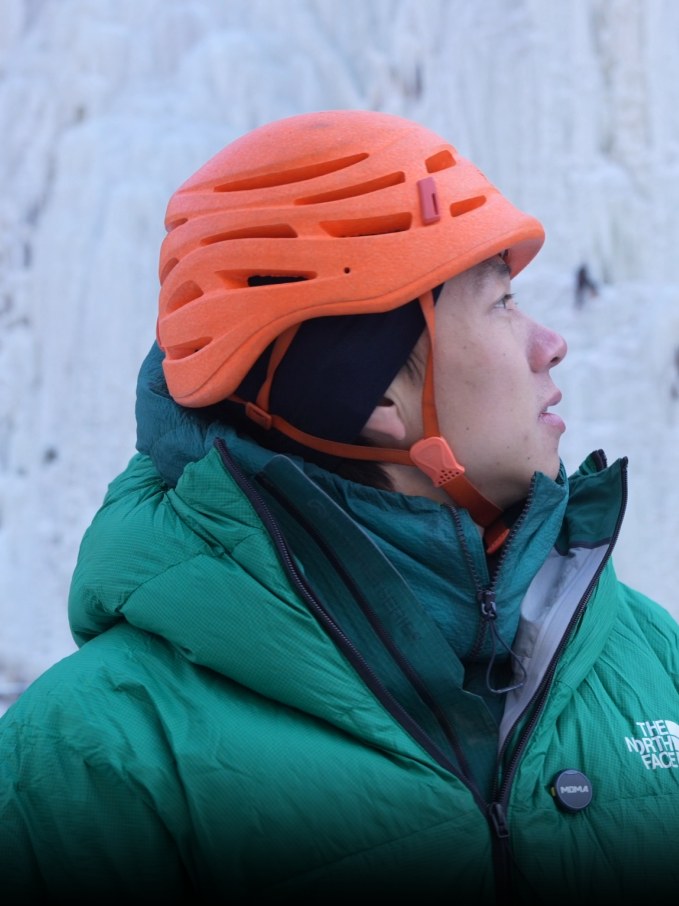
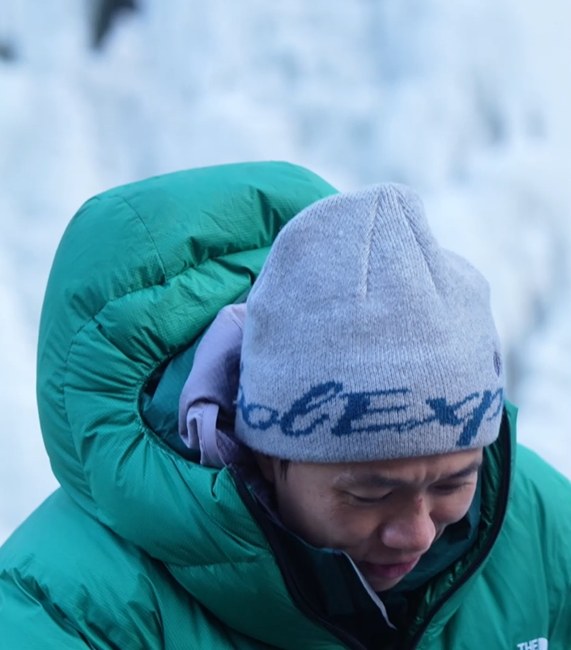
    On the ice, a real climbing helmet is non-negotiable — shards from above are no joke. The helmet itself, though, is rarely warm. That is where a thin, stretch beanie earns its keep: light, elastic, close to the head, under the lid. The same idea works inside a ski helmet. A light, stretchy neck piece does a similar job for the collar gap.

    In the store, a helmet-friendly option is the 17.5μm Single Layer Merino Wool Beanie (150g). For the neck, a light stretch scarf such as the 17.5µm Merino Wool Single Layer Scarf (150g) sits in the same “thin and stretchy” lane. Try the stack at home with your own helmet before a cold morning.

    Thick beanie stays out

    A bulkier winter beanie is a different hat. Extra volume usually will not play nicely under a hard shell. Keep it for winter travel, town days, and any outing where you leave the helmet behind — warmer and more comfortable when there is no lid fighting for space.

    Examples: 17.5μm Double Layer Merino Wool Beanie (200g) or a Cold Mountain warm beanie.

    Liner gloves when the shell comes off

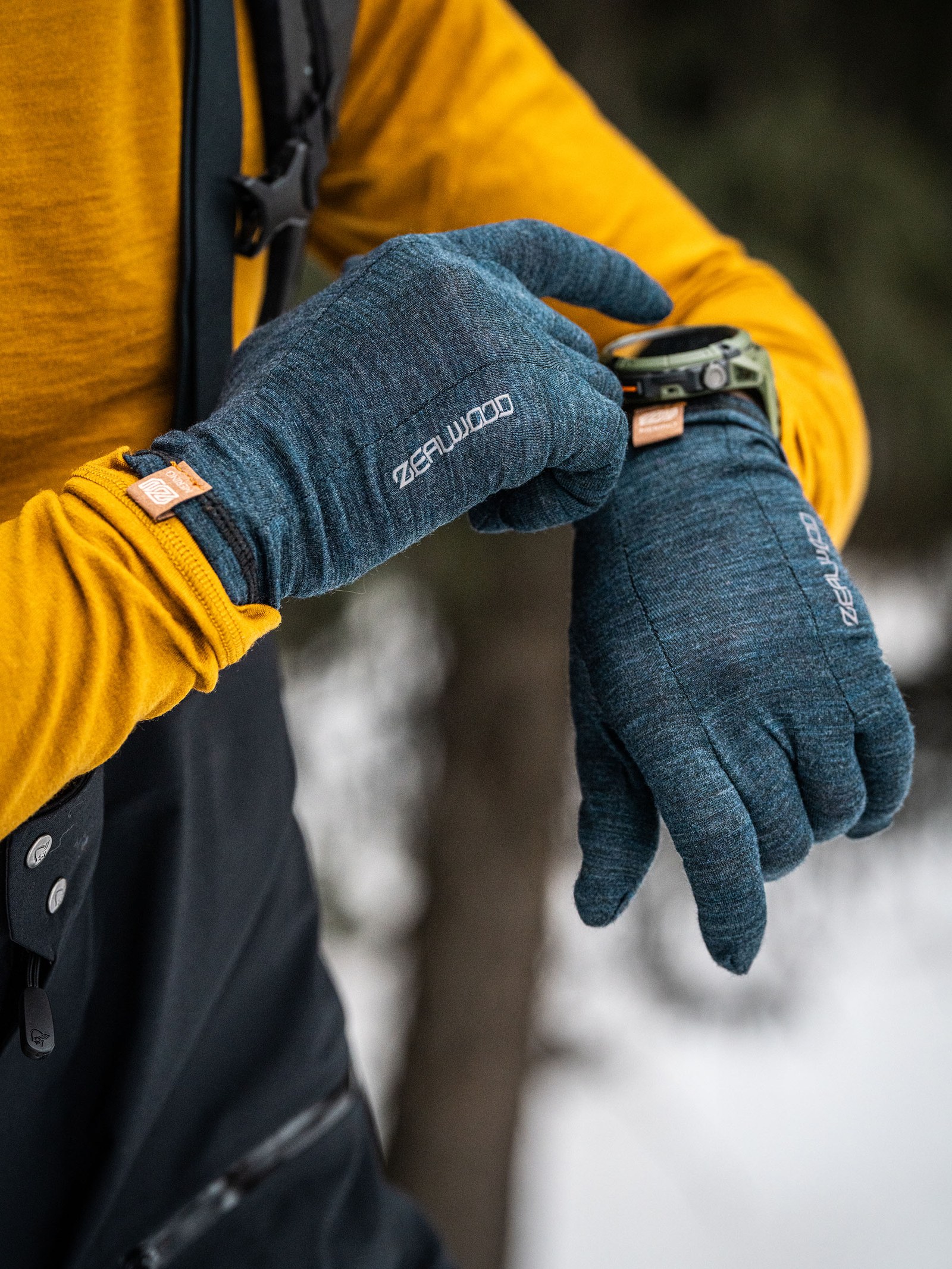
    Thin liner gloves give basic warmth on ice or ski days and help many people keep the hand feeling drier than cotton. When you peel off a bulky waterproof shell to rest, use a phone, or drink, the liner can stay on so the hand does not dump heat straight into the wind.

    We treat that job with the Lightweight Merino Wool Outdoor Gloves. Exact knit, sizing, and touchscreen options live on the product page — this post stays light on yarn specs.

    ALPINE PRO socks for kicking ice

    When you kick up the ice, a damp foot hurts precision. Dry and warm under the boot matters. A heavy merino alpine sock with denser knit at the heel and sole for cushion, plus a mid-calf cuff that helps hold the sock up and protect the ankle, is built for cold approaches and outdoor boots — not as a fashion crew.

    On the store that lane is the ALPINE PRO series: ALPINE II Merino Wool Crew Socks Winter. Materials and sizing are on the PDP.

    250 g next to skin for ice stop-start

    On ice, swinging tools often runs hot and sweaty; standing still to read the line dumps you back into the cold. A ~250 g merino base layer next to skin is one way many climbers buffer that swing. Merino can hold around / up to about 35% of its own weight in moisture and still feel warmer than a soaked cotton layer for many wearers — then move vapor out as conditions allow. The fiber’s loft also helps trap a thin air buffer between skin and the cold. Fit, pace, and how wet the rest of the system already is still matter; treat the percentage as a fabric property note from our ice/snow guidance, not a guarantee for every hour on the wall.

    Examples: 16.5μm Men’s Long-Sleeve Stand Collar Merino Wool Base Layer (250g) and 16.5μm Women’s Long-Sleeve Merino Wool Base Layer (250g).

    Ski stop-start and ~200 g

    Skiers know the same pattern in a different costume: hot when you ski, cold when you stop. A ~200 g/m² merino base layer aims at the middle — enough warmth for the chair, enough breathability when you are moving. Stretch and cut differ by style; check the product page for fabric content and fit rather than treating a blog line as a universal spec.

    Example for milder stop-start days: 17.5µm Women’s Long-sleeved Round Neck Merino Wool T-shirt (200g). Men’s midweight zipper options are on the store when available — confirm content on the PDP.

    Ski and snowboard sock lines

    We also carry ski socks aimed at alpine and snowboard days — cushion vs race-leaning builds, taller cuffs, and merino for a drier feel through a closed boot. Construction details (bind systems, toe seams, heel reinforcement) live on each PDP; this note stays light.

    Available now:

    Closing

    Ice hanging on a wall, silver slopes, snow bands woven across winter hills — may every ice and snow day still hold its own clean line of fun.

    Small layers under the shell: thin beanie inside the helmet, thick beanie for town, liner gloves when the waterproof hand shell comes off, alpine socks for hard cold under the boot, and a base weight that matches stop-start ice or ski. Then enjoy the day.

    zealwood.com
    woolexplorer.com

    Originally published on Wool Explorer. Adapted for ZEALWOOD.

  • Daocheng, Garzê — Wool Layers at About 4,600 m

    Daocheng, Garzê — Wool Layers at About 4,600 m

    Daocheng, Garzê — by an alpine lake at about 4,600 m. In ZEALWOOD wool socks, base layers, and midlayers: hike, climb, stay out longer.

    High country days ask a lot from what you wear next to skin. Merino wool socks, a wool base layer, and a midlayer help you keep moving when the wind comes off the water and the sun shifts on the ridge.

    zealwood.com
    woolexplorer.com

  • First-Order Free Shipping Invite

    New to zealwool.com? Ask us for a first-order free shipping invite and we’ll send you a private code.

    Browse merino socks and apparel on this site, then email rico@woolexploration.com to request your invite. This is not an automatic checkout discount — a code is sent only when you ask.

  • Wool Is Not a Miracle Fiber — An Honest Look at Merino

    Wool Is Not a Miracle Fiber — An Honest Look at Merino

    Wool is not a miracle fiber. It pills. It is not the most abrasion-proof cloth we sell. Moths go after it because it is protein. When it holds more than about 35% of its dry weight in moisture, it can feel wet and cold. People have told us a thick Thule Pro sock still felt that way. Change into a dry pair. Feet usually come back.

    In a dry, well-heated northern winter, wool’s appetite for moisture can leave skin tight, with static. Moisturizer helps. Our gear also runs a little heavy. Ultralight racing is not the job.

    What it still does: next-to-skin comfort, temperature and humidity that stay in a usable range, and a long day that does not turn the garment sour. After light sweat it can dry and stay warm. A lot of synthetic cloth cannot copy that mix.

    We blend for the job. Nylon where the cloth has to take a beating. Tencel or silk in summer tees. A little elastane so underwear holds. If you are trying wool for the first time, look for more than 50% wool. We still prefer a real wool next-to-skin layer. This year’s 150 g long-sleeve and short-sleeve tees are the ones we wear for travel and commuting. Store them dry. Use moth protection.

    Choose wool only if you can live with the faults. It will not fix every outdoor problem. We still reach for it, because the feel, the function, and the fact that it can break down in the world are still the reasons we work with it.

    Wear Nature, Go Further.
    ZEALWOOD / Wool Explorer

    Originally published on Wool Explorer. Adapted for ZEALWOOD.

  • A Merino T for Four Seasons in a Day

    A Merino T for Four Seasons in a Day

    On a northwest summer trip the morning can sit at 5°C in light rain. By noon it is past 30°C. A 5,000 m pass will throw wind and a sudden drop. Open ground for a hundred kilometers leaves you in hard sun. The scenery is the easy part. The body does the work.

    A merino T is built for that kind of day, not for a single weather icon. It holds warmth in the cold hours. It breathes when the sun is up. After you have worn one, two things tend to stick: a heavy sweat does not leave the cloth glued to you, and the walk into a cold room does not turn that sweat into a shock. Odor is often quiet at the end of the day. Hang the shirt. It is usually ready again.

    Wool responds to the wearer. Crimped fiber traps air and keeps a small dry climate next to the skin. In heat, sweat can move. In cold, that air still insulates. Bacteria make odor from sweat and oil; wool holds those molecules, so airing works. Amino acids in the fiber absorb some UV below 300 nm — strong among natural fibers. We are not putting a UPF rating on that line.

    This is travel and trail clothing for days that refuse to pick a season. One shirt.

    Wear Nature, Go Further.
    ZEALWOOD / Wool Explorer

    Originally published on Wool Explorer. Adapted for ZEALWOOD.

  • Does Merino Dry Fast? Wool vs. Synthetic Moisture Management

    Does Merino Dry Fast? Wool vs. Synthetic Moisture Management

    People ask if merino is quick-dry. If that means “beats polyester at dumping liquid off the face of the cloth,” the honest answer is no.

    Quick-dry is not how fast a fabric drinks sweat. It is how fast sweat leaves the skin, reaches the outer face, and evaporates. Polyester and nylon absorb almost nothing (regain around 0.4% and 4.5% in the classroom piece). They move liquid by capillary action. In moving air that feels fast. In still air it can feel wet and cold, because the water never really left you.

    Wool takes vapor into the fiber. Moisture regain around 25–35%. It dries more slowly, and it can still feel dry on the skin after holding a lot of that moisture, because the wet is inside the fiber. Taking vapor in gives a little warmth; letting it go takes heat with it. Water also moves heat away much faster than still air. Keeping the skin surface dry is the point.

    Want wool to dry faster? Lower the gsm. Blend nylon (the piece cites a 50/50 example). Add mesh. That is a trade, not a magic trick. Thin pure wool also tears more easily.

    How we would pack it: hard stop-and-go effort in the wind, a synthetic next to skin plus an extra layer. Hiking, walking, short travel, stopping often — light merino or a merino blend. On trips where a warm base layer is treated as safety kit, do not swap it for a generic synthetic just because the hangtag says quick-dry.

    Wool is not trying to be the fastest-drying cloth. It is trying to keep you comfortable for longer. Match the fiber to the day.

    Wear Nature, Go Further.
    ZEALWOOD / Wool Explorer

    Originally published on Wool Explorer. Adapted for ZEALWOOD.

  • The Two-Sock Rule: Why One Pair Won’t Last a Hard Day on Trail

    The Two-Sock Rule: Why One Pair Won’t Last a Hard Day on Trail

    A good pair of wool socks helps your feet adapt, until they don’t. On a long hike or trail run, one “best” pair rarely finishes the day. Feet keep sweating. After enough kilometers the cushioning drops, wet skin rubs harder, and even a well-made merino sock can feel like sandpaper. That is a common way blisters start.

    This is not an argument against wool. It is an argument against asking one pair to do a two-pair job.

    Wool is good at holding moisture in the fiber. That is a strength, until the sock no longer feels dry. In the field, around 35% of dry weight is a useful turning point to watch for, not a lab certificate. Wet skin also has more friction.

    Wet socks run cold because wool stays warm by trapping still air. Water moves heat away much faster than air. Once moisture pushes that air out, a thicker sock does not fix it. A dry one does.

    The rule: start dry. When the pair on your feet feels heavy, cold, or slick, change. Clip the wet pair to a daisy chain with a carabiner, or hang it in a light mesh bag on a trail run. Merino’s lanolin helps with odor; once air-dried, that pair can go back on. Same rule for any next-to-skin layer. If that layer is soaked, a thicker shell will not bring the heat back.

    Two pairs is the minimum. Two or three is better on a long day. Swap. Clip. Dry. Repeat.

    If you are packing ZEALWOOD: Trail Run Pattern, Travel MD, Thule Pro (68.4% merino), Alpine Pro (63% merino), Ski with Z-CROSS. We do not call these 100% merino socks. The main yarn is wool; the finished sock still needs nylon and elastane to stay together on trail.

    Wear Nature, Go Further.
    ZEALWOOD / Wool Explorer

    Originally published on Wool Explorer. Adapted for ZEALWOOD.