Blog

  • Wool Is Not a Miracle Fiber — An Honest Look at Merino

    Wool Is Not a Miracle Fiber — An Honest Look at Merino

    Wool is not a miracle fiber. It pills. It is not the most abrasion-proof cloth we sell. Moths go after it because it is protein. When it holds more than about 35% of its dry weight in moisture, it can feel wet and cold. People have told us a thick Thule Pro sock still felt that way. Change into a dry pair. Feet usually come back.

    In a dry, well-heated northern winter, wool’s appetite for moisture can leave skin tight, with static. Moisturizer helps. Our gear also runs a little heavy. Ultralight racing is not the job.

    What it still does: next-to-skin comfort, temperature and humidity that stay in a usable range, and a long day that does not turn the garment sour. After light sweat it can dry and stay warm. A lot of synthetic cloth cannot copy that mix.

    We blend for the job. Nylon where the cloth has to take a beating. Tencel or silk in summer tees. A little elastane so underwear holds. If you are trying wool for the first time, look for more than 50% wool. We still prefer a real wool next-to-skin layer. This year’s 150 g long-sleeve and short-sleeve tees are the ones we wear for travel and commuting. Store them dry. Use moth protection.

    Choose wool only if you can live with the faults. It will not fix every outdoor problem. We still reach for it, because the feel, the function, and the fact that it can break down in the world are still the reasons we work with it.

    Wear Nature, Go Further.
    ZEALWOOD / Wool Explorer

    Originally published on Wool Explorer. Adapted for ZEALWOOD.
  • A Merino T for Four Seasons in a Day

    A Merino T for Four Seasons in a Day

    On a northwest summer trip the morning can sit at 5°C in light rain. By noon it is past 30°C. A 5,000 m pass will throw wind and a sudden drop. Open ground for a hundred kilometers leaves you in hard sun. The scenery is the easy part. The body does the work.

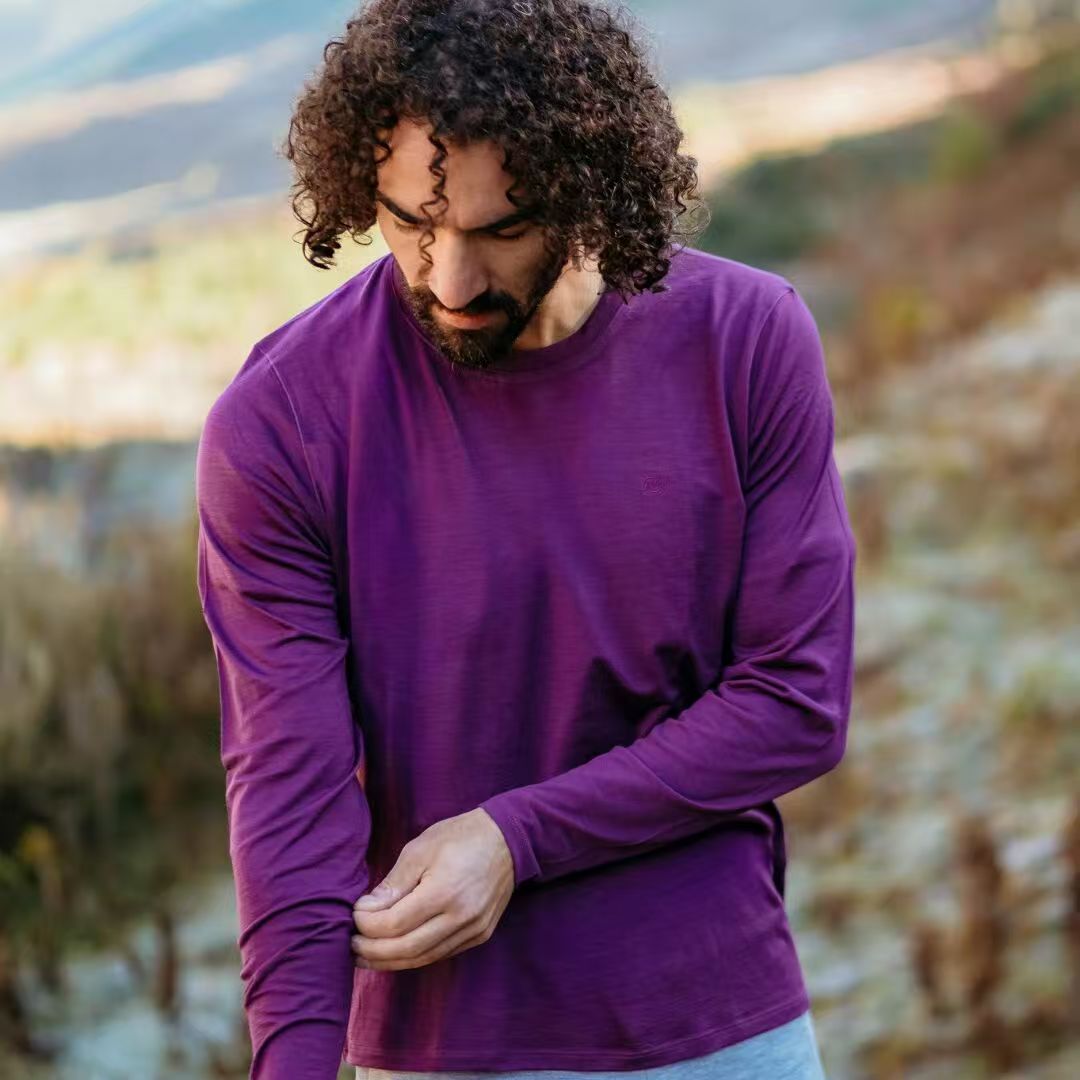
    A merino T is built for that kind of day, not for a single weather icon. It holds warmth in the cold hours. It breathes when the sun is up. After you have worn one, two things tend to stick: a heavy sweat does not leave the cloth glued to you, and the walk into a cold room does not turn that sweat into a shock. Odor is often quiet at the end of the day. Hang the shirt. It is usually ready again.

    Wool responds to the wearer. Crimped fiber traps air and keeps a small dry climate next to the skin. In heat, sweat can move. In cold, that air still insulates. Bacteria make odor from sweat and oil; wool holds those molecules, so airing works. Amino acids in the fiber absorb some UV below 300 nm — strong among natural fibers. We are not putting a UPF rating on that line.

    This is travel and trail clothing for days that refuse to pick a season. One shirt.

    Wear Nature, Go Further.
    ZEALWOOD / Wool Explorer

    Originally published on Wool Explorer. Adapted for ZEALWOOD.

  • Does Merino Dry Fast? Wool vs. Synthetic Moisture Management

    Does Merino Dry Fast? Wool vs. Synthetic Moisture Management

    People ask if merino is quick-dry. If that means “beats polyester at dumping liquid off the face of the cloth,” the honest answer is no.

    Quick-dry is not how fast a fabric drinks sweat. It is how fast sweat leaves the skin, reaches the outer face, and evaporates. Polyester and nylon absorb almost nothing (regain around 0.4% and 4.5% in the classroom piece). They move liquid by capillary action. In moving air that feels fast. In still air it can feel wet and cold, because the water never really left you.

    Wool takes vapor into the fiber. Moisture regain around 25–35%. It dries more slowly, and it can still feel dry on the skin after holding a lot of that moisture, because the wet is inside the fiber. Taking vapor in gives a little warmth; letting it go takes heat with it. Water also moves heat away much faster than still air. Keeping the skin surface dry is the point.

    Want wool to dry faster? Lower the gsm. Blend nylon (the piece cites a 50/50 example). Add mesh. That is a trade, not a magic trick. Thin pure wool also tears more easily.

    How we would pack it: hard stop-and-go effort in the wind, a synthetic next to skin plus an extra layer. Hiking, walking, short travel, stopping often — light merino or a merino blend. On trips where a warm base layer is treated as safety kit, do not swap it for a generic synthetic just because the hangtag says quick-dry.

    Wool is not trying to be the fastest-drying cloth. It is trying to keep you comfortable for longer. Match the fiber to the day.

    Wear Nature, Go Further.
    ZEALWOOD / Wool Explorer

    Originally published on Wool Explorer. Adapted for ZEALWOOD.
  • The Two-Sock Rule: Why One Pair Won’t Last a Hard Day on Trail

    The Two-Sock Rule: Why One Pair Won’t Last a Hard Day on Trail

    A good pair of wool socks helps your feet adapt, until they don’t. On a long hike or trail run, one “best” pair rarely finishes the day. Feet keep sweating. After enough kilometers the cushioning drops, wet skin rubs harder, and even a well-made merino sock can feel like sandpaper. That is a common way blisters start.

    This is not an argument against wool. It is an argument against asking one pair to do a two-pair job.

    Wool is good at holding moisture in the fiber. That is a strength, until the sock no longer feels dry. In the field, around 35% of dry weight is a useful turning point to watch for, not a lab certificate. Wet skin also has more friction.

    Wet socks run cold because wool stays warm by trapping still air. Water moves heat away much faster than air. Once moisture pushes that air out, a thicker sock does not fix it. A dry one does.

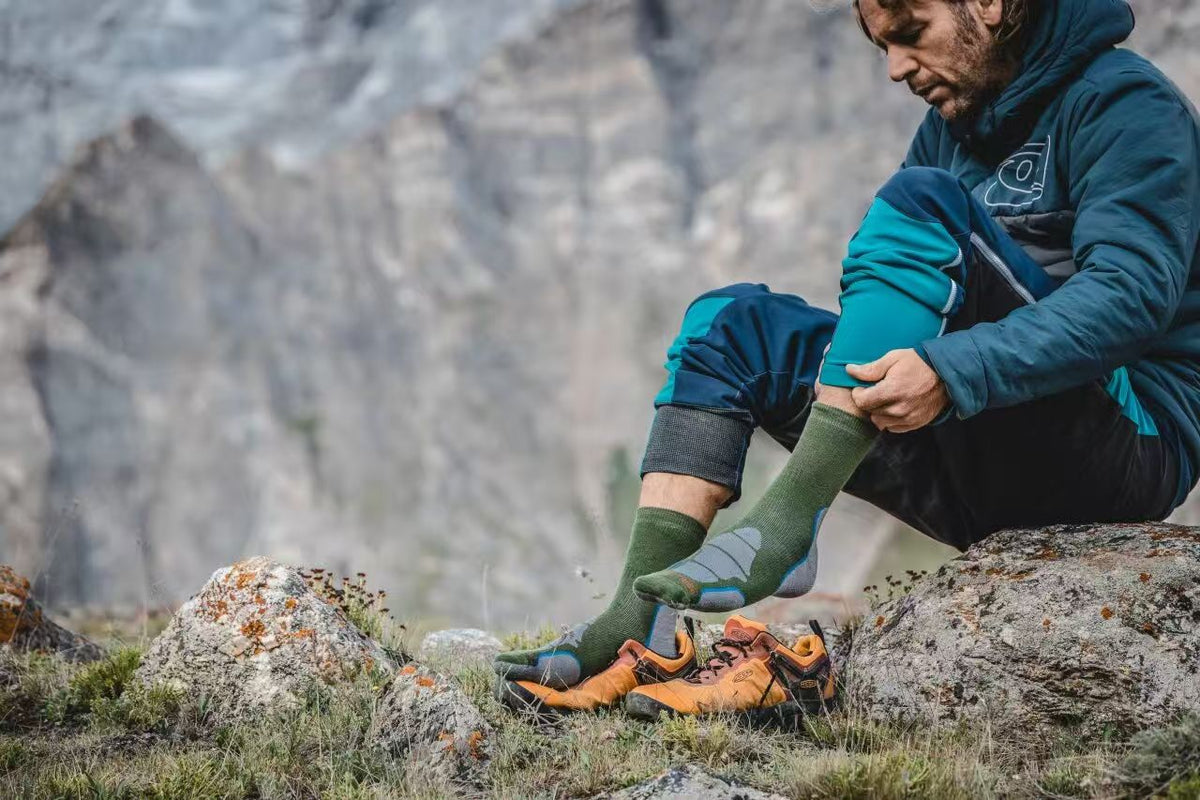
    The rule: start dry. When the pair on your feet feels heavy, cold, or slick, change. Clip the wet pair to a daisy chain with a carabiner, or hang it in a light mesh bag on a trail run. Merino’s lanolin helps with odor; once air-dried, that pair can go back on. Same rule for any next-to-skin layer. If that layer is soaked, a thicker shell will not bring the heat back.

    Two pairs is the minimum. Two or three is better on a long day. Swap. Clip. Dry. Repeat.

    If you are packing ZEALWOOD: Trail Run Pattern, Travel MD, Thule Pro (68.4% merino), Alpine Pro (63% merino), Ski with Z-CROSS. We do not call these 100% merino socks. The main yarn is wool; the finished sock still needs nylon and elastane to stay together on trail.

    Wear Nature, Go Further.
    ZEALWOOD / Wool Explorer

    Originally published on Wool Explorer. Adapted for ZEALWOOD.