


The climb warms you up. You unzip, maybe peel a jacket, and keep moving in the layer next to your skin. Then you stop — a windy overlook, a snack, a photograph — and the air feels colder than the forecast. If that first layer is damp, the swing feels sharper still.
This is a trail note on that problem: why the base layer decides how the swing feels, and how to choose between a midweight merino base (around 200 g) and a slightly heavier one (around 250 g). It is not a merino-T essay for a travel day that flips seasons — that is already in A Merino T for a Day That Will Not Stay in One Season. And it is not a head-to-toe winter packing list.
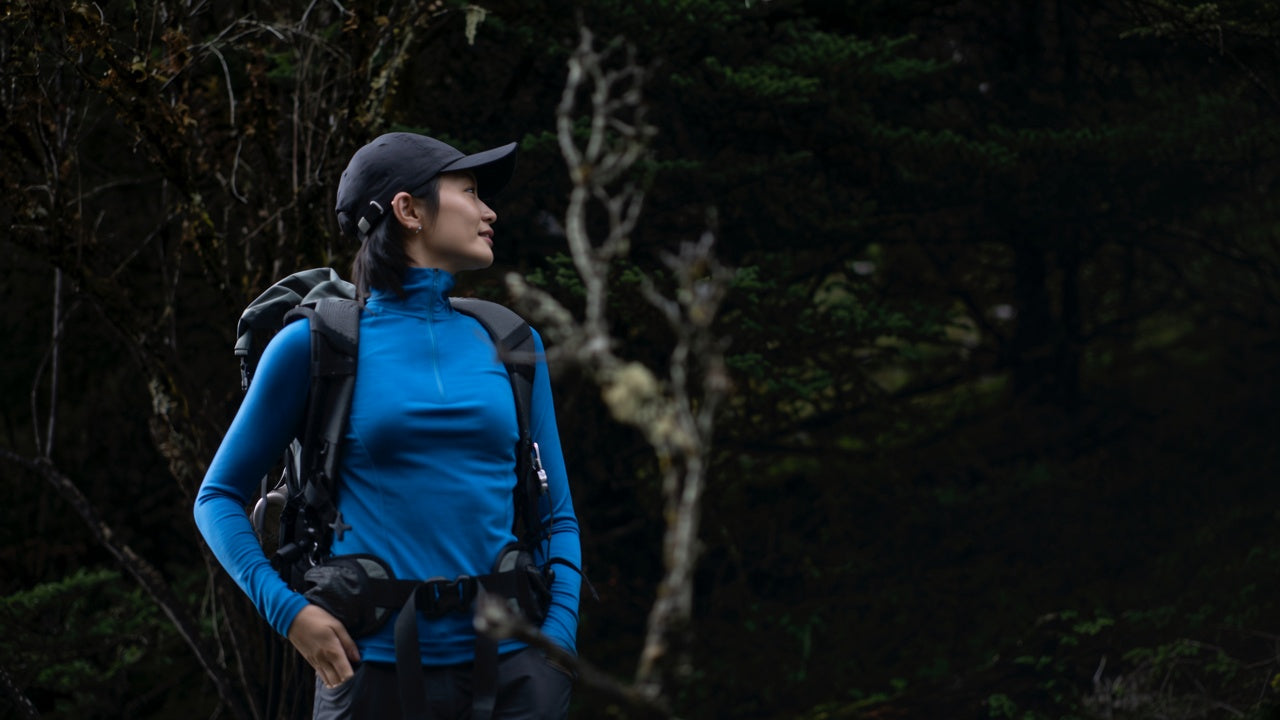
Three jobs, not three jackets
Outdoor layering is usually described as a three-layer system. The useful way to hear that is as three jobs, not a rule that you must wear three jackets all day.
- The base, next to the skin, should move sweat and heat off the surface so you do not chill as quickly when you stop.
- The mid layer holds warm air close to the body. It is the piece you are most likely to take off on the climb and put back on at the overlook.
- The shell stands between you and wind, rain, or snow, while still letting extra moisture leave the system.
You can combine two jobs in one piece, or use two pieces for one job. What matters is stacking for the place and the weather you are actually walking into.
Why the base decides how the swing feels
The base sits on skin, so what happens there becomes how the day feels. Warmth alone is not enough. Under the arms and along the back, heat and moisture can collect. If they stay in the next-to-skin layer, a stop in the wind often feels like a small cliff.
Merino is a common outdoor choice for that first layer. The fiber’s natural crimp helps trap still air for warmth, and merino next to the skin often feels more comfortable than cotton as you heat up and cool down. That is a field habit, not a guarantee: merino can still feel wet when it is truly soaked, and it will not replace a shell in real wind or rain. We have written more honestly about that in Wool Is Not a Miracle Fiber and Does Merino Dry Fast?.
Midweight, or slightly heavier
For a day with a real climb and a real pause — a fall trail, a winter hike, a stop-start outing — a midweight merino base, around 200 g, is usually a solid starting point. It is warm enough for the overlook if you add a mid and a shell, and easy enough to move in on the way up.
If the day is clearly colder, slower, or you expect to stand longer in the wind, a slightly heavier merino base, around 250 g, can sit under the same mid and shell. Exact fabric details live on each product page; this blog stays with the simple midweight / slightly heavier split.
Browse the men’s merino base layers and women’s merino base layers, or start with these in-stock pieces:
- Men’s midweight zip-neck merino base (200 g)
- Women’s midweight merino long-sleeve (200 g)
- Men’s 250 g stand-collar merino base
- Women’s 250 g merino base
- Women’s 250 g stand-collar merino base
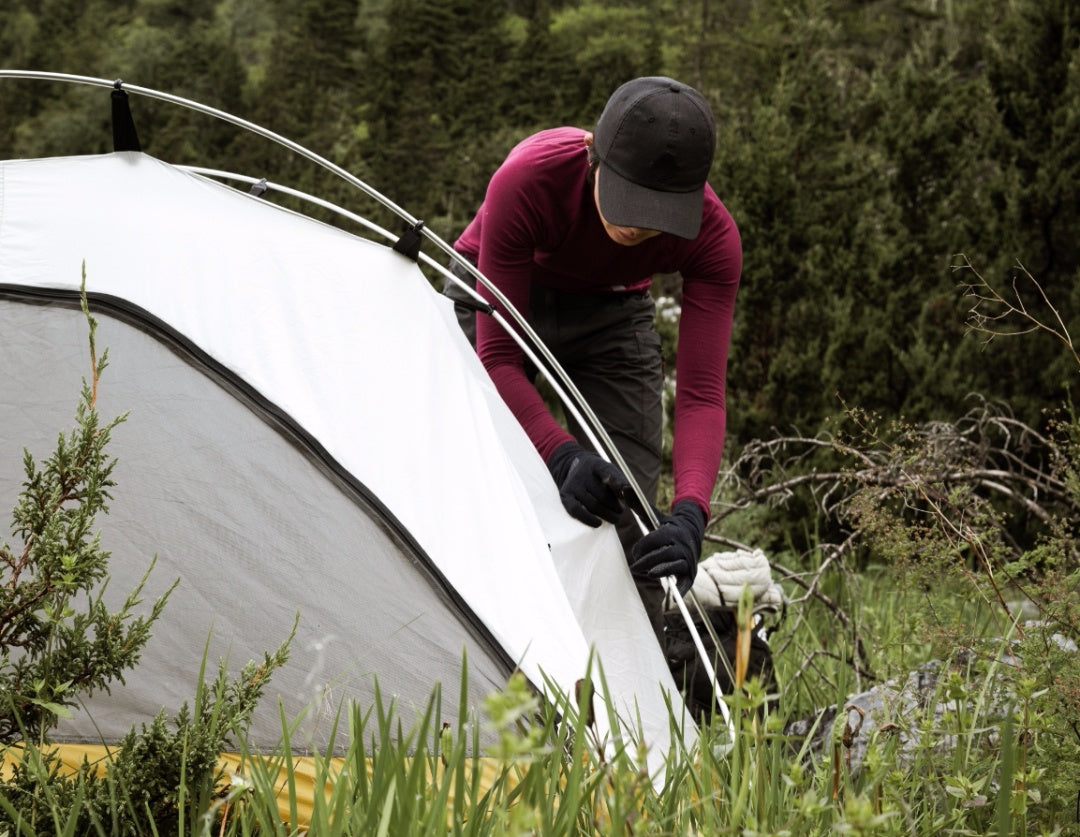

A mid you can shed, and a shell for the stop
Once the base is right, the rest of the system is mostly timing. Peel the mid on the climb; put it back on when you stop. Add the shell when the wind or weather asks for it — not because a checklist said you must wear three pieces all day.
Hats and gloves matter on cold stops too, but we already covered the under-helmet, liner-glove, and ski-sock kit in Ice and Snow Small Kit. This note stays with the base.
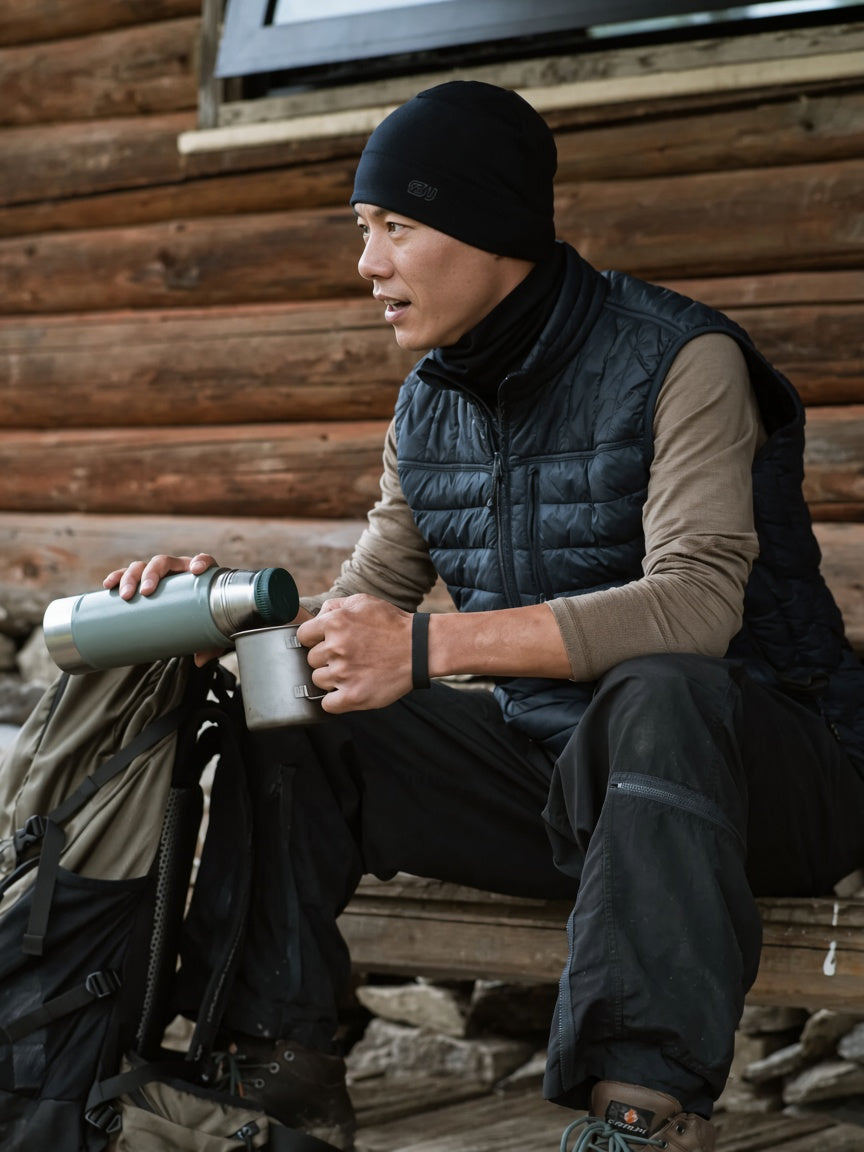

Closing
When the forecast, or your own effort, creates a personal weather change, rebuild from the skin out: a merino base that can handle the climb, a mid you can shed, a shell for the stop. It is not magic. It is just a more comfortable way through a day that will not stay at one temperature.
Follow each item’s care label.
— WOOLEXPLORER editorial · adapted from ZEALWOOD WeChat《不是巨热就是巨冷,羊毛贴身层帮你抵御断崖式降温》(2023-11-10)
发表回复